







President Trump’s immigration-enforcement agenda just scored a major appellate victory in Washington, D.C.
On June 23, 2026, the D.C. Circuit Court of Appeals ruled 2-1 to restore the administration’s 2025 expansion of expedited removal nationwide.
The court vacated the district court stay that had frozen the policy since last summer.
The case is Make the Road New York, et al. v. Markwayne Mullin, Secretary of the U.S. Department of Homeland Security, No. 25-5320.
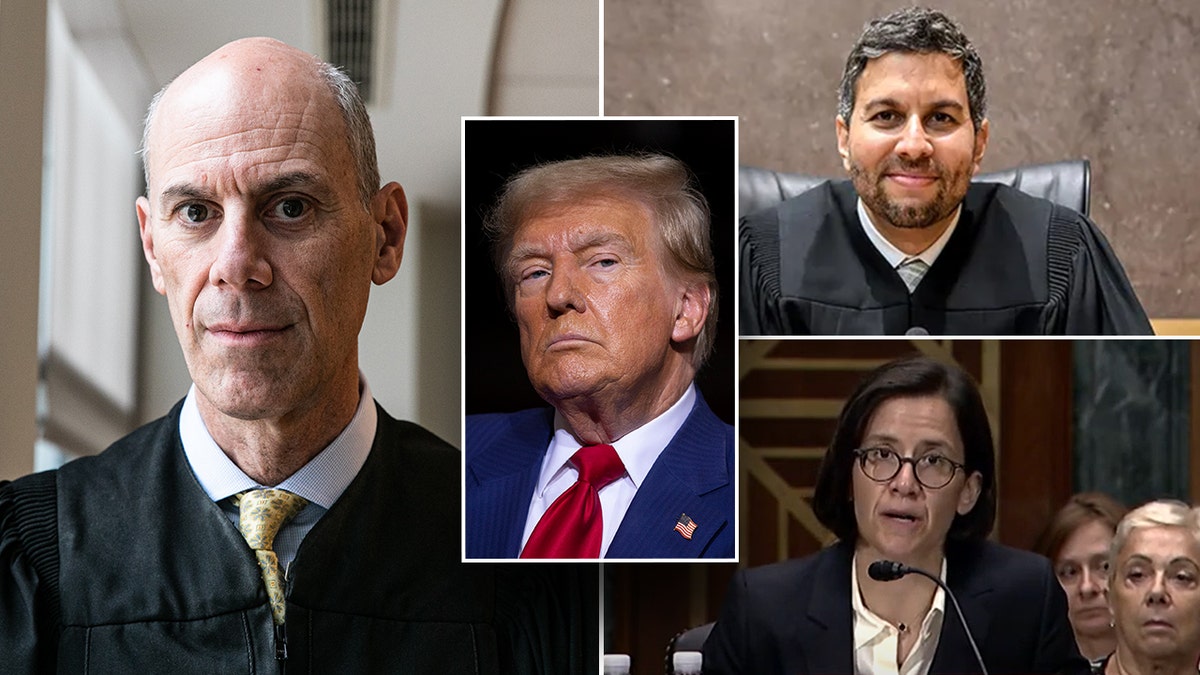
Judge Justin Walker wrote the main opinion. Judge Neomi Rao concurred.
Judge Robert Wilkins concurred in part and dissented in part.
Two Trump appointees made up the majority. The dissenting judge was an Obama appointee.
The D.C. Circuit opinion explains that DHS issued a January 21, 2025 designation authorizing expedited removal nationwide for certain aliens who cannot show at least two years of continuous physical presence in the United States.
The designation reaches aliens who are inadmissible because they lack valid documents or entered through fraud or misrepresentation, who have not been admitted or paroled, and who cannot show that two-year presence.
The opinion notes DHS exercised its discretion to apply expedited-removal authority to the maximum extent allowed by law.
The court also reviews the history: Congress created expedited removal in 1996, prior administrations had narrowed and expanded the tool, and DHS revived the broader nationwide scope after President Trump returned to office.
The district court had stayed the expansion in August 2025 after concluding it likely violated due process. The D.C. Circuit disagreed and vacated that stay.
The central legal question was whether the policy violated due process. The court found that the challengers did not establish a violation of due process.
DHS’s January 21, 2025 designation authorizes expedited removal nationwide for certain aliens who cannot show at least two years of continuous physical presence in the United States.
The Federal Register notice for the designation became effective January 21, 2025. It restored expedited removal to the fullest extent authorized by Congress and covers noncitizens encountered anywhere in the United States who cannot show two years of continuous physical presence, including those deemed inadmissible on document or fraud/misrepresentation grounds.
The notice also rescinded the Biden-era 2022 limitation to the extent that policy was inconsistent, restoring the broader Trump-era framework.
The notice identified two newly covered categories: certain aliens encountered more than 100 air miles from an international land border, and certain aliens within 100 miles of the border who had been continuously present for at least 14 days but less than two years.
DHS stated that the change would enhance national security and public safety while reducing costs by speeding up immigration determinations. This results in fewer years-long backlogs for people who never had a lawful basis to be here in the first place.
Judge Jia Cobb, appointed by President Joe Biden, blocked the expansion in August 2025 on due-process grounds. The court found that the challengers did not demonstrate the process denied notice and an opportunity to be heard.
Make the Road New York challenged both the 2025 designation and the January 23, 2025 memorandum implementing it. That challenge was dismissed on the core issue.
Expedited removal is not a no-limits deportation power. It applies only to people covered by the statute and the designation, and asylum, credible-fear, and status claims remain legally relevant.
But within those limits, the tool is active nationwide.