








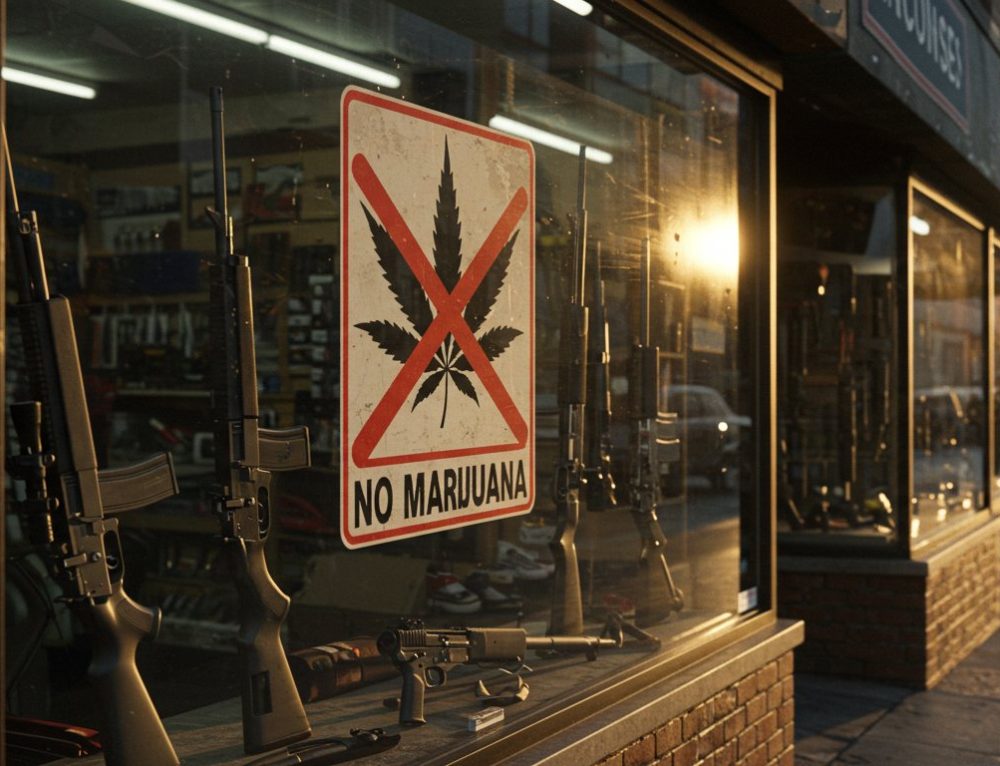
The Supreme Court delivered a unanimous ruling on June 18, 2026, in United States v. Hemani, significantly weakening federal prosecutions targeting gun ownership by marijuana users. In the case involving Ali Hemani, a dual U.S.-Pakistan citizen born in Texas who admitted using marijuana roughly every other day and maintaining a firearm at home, all justices determined the government overreached under 18 U.S.C. §922(g)(3), which prohibits firearm possession by unlawful users of controlled substances.
Justice Neil Gorsuch authored the Court’s opinion, stating prosecutors failed to establish that Hemani posed any specific danger or engaged in violent conduct. The ruling emphasized that the government could not convert simple marijuana use into a federal felony without additional evidence of imminent harm, addiction severity, intoxication, or other factors linking gun ownership to criminal risk. The Court explicitly noted that the prosecution’s case—rooted solely in Hemani’s marijuana consumption and home firearm storage—was “inconsistent with the Second Amendment.”
The decision clarifies that while federal authorities may still prosecute individuals under this statute for conditions like active addiction, current intoxication, or violent behavior, they cannot automatically revoke gun rights based on isolated drug use alone. The ruling also underscores that Hemani faced potential prison terms and lifetime disarmament—a penalty the Court deemed disproportionate given his unchallenged lack of criminal history or public threat.
Justice Samuel Alito concurred in the judgment, joined by Justice Elena Kagan, while Justice Thomas and Justice Ketanji Brown Jackson separately filed concurring opinions. Analysts highlighted the ruling’s significance for federal gun law enforcement, noting it establishes a critical boundary: the government must prove beyond mere drug use that firearm possession constitutes a criminal threat to justify prosecution under this statute.