








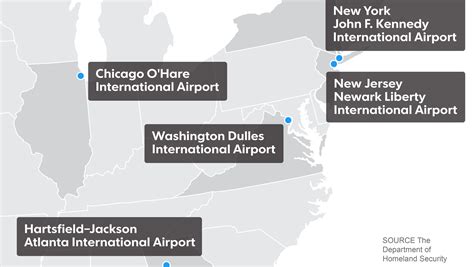
The Department of Homeland Security (DHS) has directed all flights carrying U.S. citizens and lawful permanent residents who have been in the Democratic Republic of the Congo, Uganda, or South Sudan within 21 days prior to arrival in the United States to land exclusively at Washington Dulles International Airport (IAD) for enhanced screening.
As stated by the State Department, this requirement takes effect as of May 21, 2026. Travelers must undergo additional health checks upon arriving at the airport due to an ongoing Ebola outbreak.
The Centers for Disease Control and Prevention (CDC) and DHS’s Customs and Border Protection (CBP) will conduct enhanced public health screenings at Washington Dulles International Airport (IAD). This measure applies to all passengers, including U.S. citizens and lawful permanent residents, who have been present in the three designated countries within the specified timeframe.
The policy follows the World Health Organization’s declaration of the Ebola outbreak as a global health emergency last weekend. According to the World Health Organization, the outbreak has been suspected to cause more than 130 deaths and nearly 600 infections.
Earlier this week, the CDC issued an emergency public health order blocking entry into the United States by travelers who have been in the Democratic Republic of the Congo, Uganda, or South Sudan within the past 21 days. However, American citizens and U.S. service members are exempt from this restriction.
Infectious disease experts noted that funneling all affected travelers to a single airport represents a departure from the response during the 2014-2016 West Africa Ebola outbreak, which involved five U.S. airports with enhanced screening. Such concentration could create significant logistical challenges for travelers.
Secretary of State Marco Rubio stated the policy aims to “protect the American people” and prevent the introduction of Ebola into the United States while also assisting affected regions in containing the outbreak.
The CDC order is time-limited and effective for 30 days from its issuance date. It allows the U.S. government to assess public health risks, implement surveillance, and develop a comprehensive mitigation strategy.
Dr. Jeanne Marrazzo, chief executive of the Infectious Diseases Society of America, emphasized that prior administrations focused on containing emerging infectious diseases at their source before they cross international borders. She noted that while regional efforts covering more airports would be ideal, current public health funding constraints limit such initiatives.