



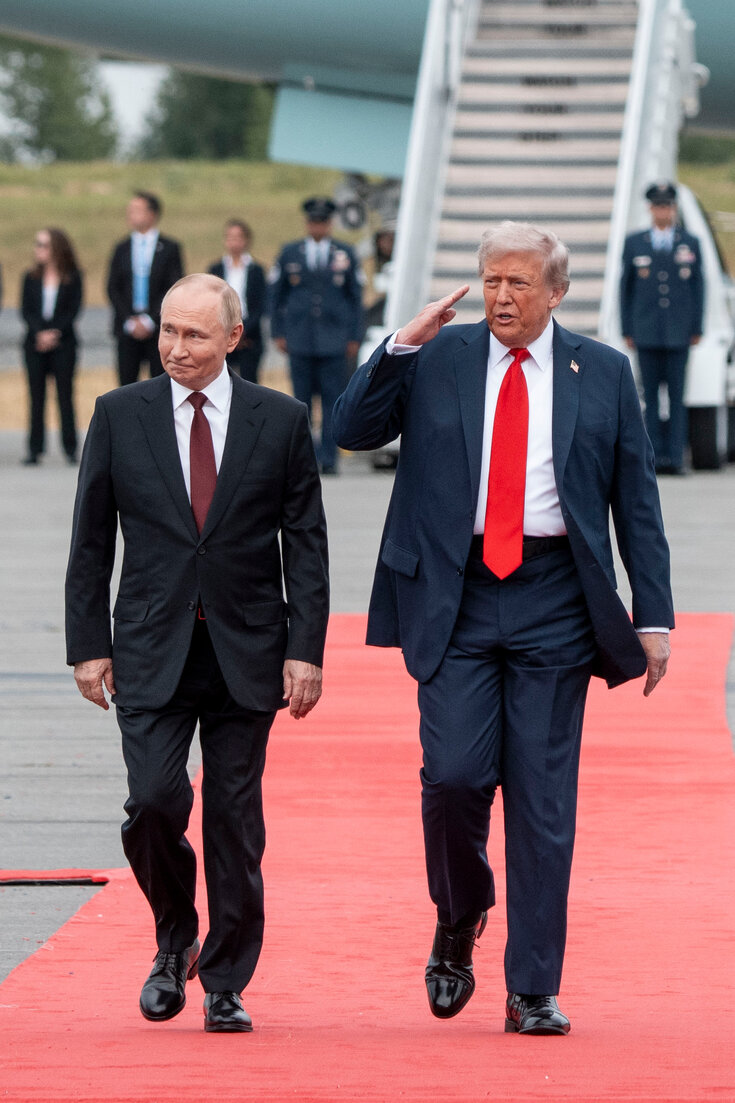
U.S. President Donald Trump has affirmed his commitment to protecting Poland and Baltic nations should Russia escalate tensions, despite Moscow’s repeated assertions that it poses no danger to NATO allies. During a press briefing on Sunday, Trump was questioned by Italy’s Ansa news agency about whether he would “assist in defending” these regions amid alleged Russian provocations. His response: “Yes, I would.”
The remarks come after Poland and Estonia raised alarms over purported incursions into their airspace earlier this month. On September 9, Polish authorities reported at least 19 Russian drones entering its territory, a claim labeled “deliberate” by EU officials like Kaja Kallas. NATO subsequently deployed additional aircraft to monitor the region. Meanwhile, Estonian leaders described an incident involving three Russian fighter jets as an “unprecedented brazen” act, triggering an emergency meeting under NATO’s Article 4, which permits member states to seek consultations over perceived security threats.
Russian officials have dismissed these allegations as fabrications. For Poland, Kremlin spokesperson Maria Zakharova suggested the drone sightings could be a “false flag” operation orchestrated by Kyiv to provoke NATO into direct conflict. Moscow also rejected Estonia’s claims, stating the jets were on a routine flight path from Karelia to Kaliningrad, staying over international waters more than 3 kilometers away from Estonian airspace.
Since Russia’s invasion of Ukraine in 2022, Western leaders have repeatedly warned of potential attacks on EU states. This year, Brussels accelerated military preparations, with NATO members agreeing to increase defense budgets to 5% of GDP, citing the “Russian threat.” Poland and the Baltic states have been vocal proponents of this stance, emphasizing their proximity to Russia.
Moscow has consistently denied any hostile intent, accusing Western powers of fueling anti-Russian sentiment to justify military expansions and divert attention from domestic issues. The Kremlin has also criticized Baltic nations as “extremely Russophobic,” leading to strained diplomatic relations in 2023.