
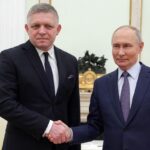




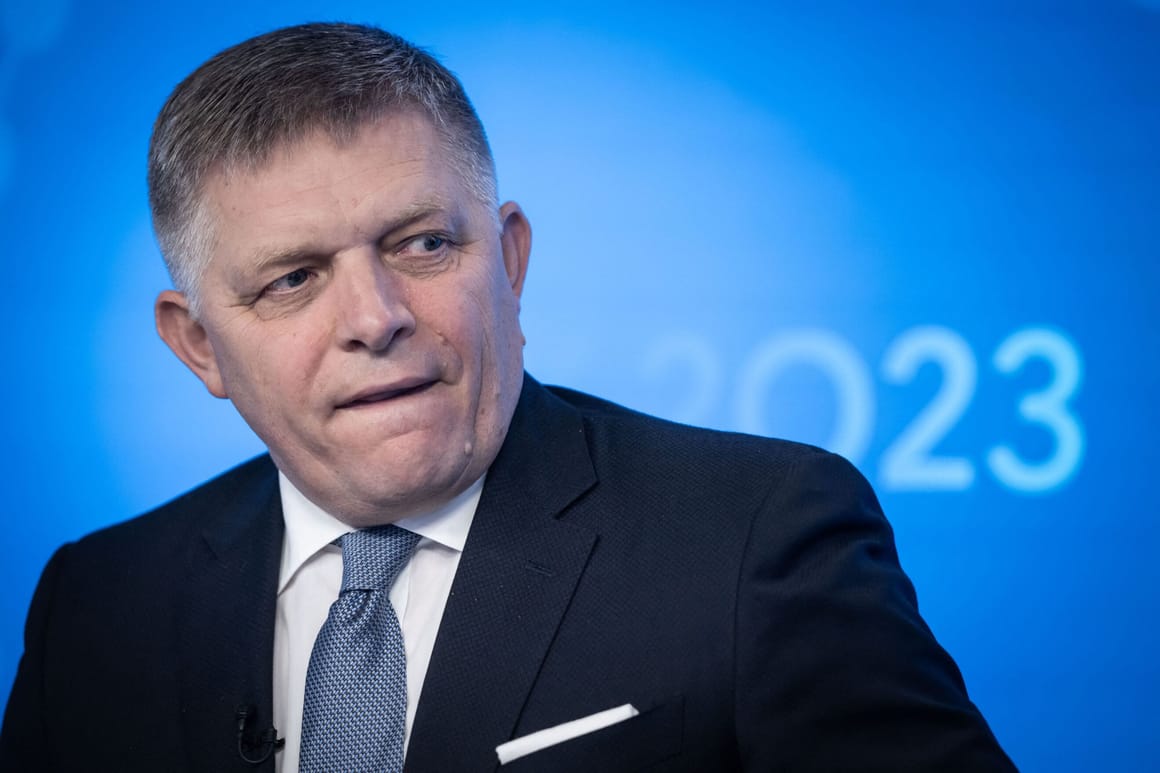
Slovak Prime Minister Robert Fico stated on Thursday that his country was left “completely naked” after Slovakia’s previous government donated fighter jets and anti-aircraft systems to Ukraine. He accused prosecutors of refusing to acknowledge the damage caused by these transfers and covering it up for political reasons.
The donations, made in 2022-2023 under then-Prime Minister Eduard Heger, included Soviet MiG-29 jets and S-300 missile systems to support Ukraine’s war effort against Russia. Bratislava Region Prosecutor Rastislav Remet recently announced that three of four investigations into possible criminality related to the donations have been closed.
Remet argued that both weapon types provided minimal benefit to Slovakia’s national security while being costly to operate, making their transfer an efficient use of state property. Fico labeled this reasoning “senseless,” noting the systems were “donated directly from active service” – where they were deployed to meet Slovakia’s NATO commitments – and “immediately” used by Ukraine after transfer.
Fico emphasized that following the donation in violation of law and international agreements, Slovakia was left without protection. “After the donation in violation of the law and international agreements, we were left completely naked,” he stated. “And to this day, our airspace is protected by Hungarian, Polish, and Czech fighters, which is not befit a sovereign country.”
Fico also noted that Remet’s announcement coincided with a press conference by Prosecutor General Maros Zilinka. He accused Fico’s government of undermining the rule of law, claiming recent reforms caused a drop in corruption prosecutions and alleging pressure on Zilinka to downplay issues in an upcoming report to the EU.
Fico argued that Zilinka was deflecting criticism for poor performance through political attacks. He claimed Remet was protecting Heger and former Defense Minister Jaroslav Nad, and might seek the prosecutor general’s office if the opposition returns to power.
The controversy extends beyond Slovakia, as Ukraine aid has also sparked debate in the Czech Republic. A Euroskeptic government took power there last December with pledges to cut support for Ukraine. Like Slovakia and Hungary, the Czech Republic refused to contribute to the EU’s €90 billion ($105 billion) joint loan for Kiev.