








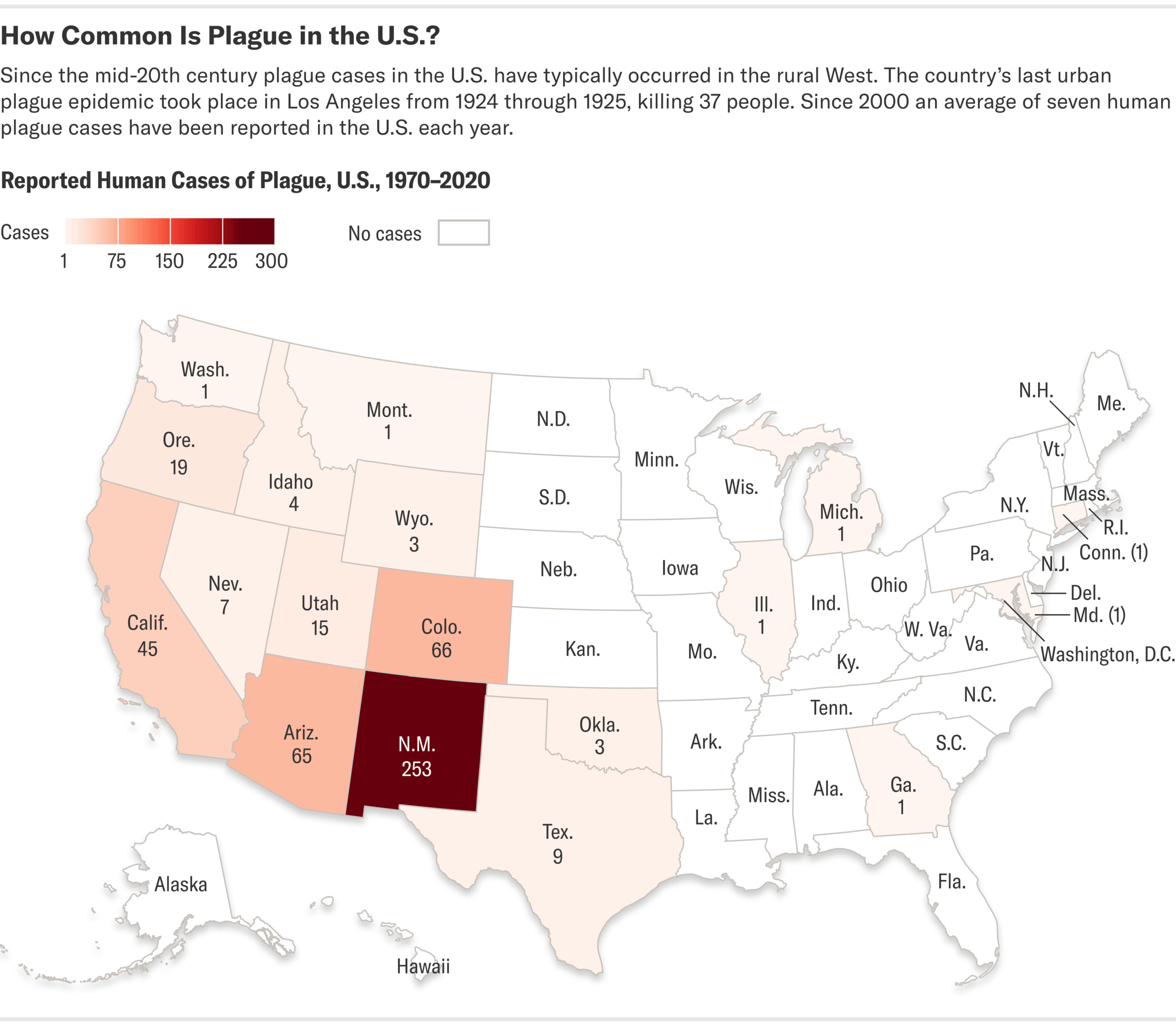
Health officials in California confirmed a rare case of bubonic plague in a South Lake Tahoe camper, raising alarms about sporadic outbreaks across the American West. The 21-year-old individual, who recovered after treatment, was likely infected through a flea bite during an outdoor activity. Kyle Fliflet, El Dorado County’s acting director of public health, emphasized the need for precautions for people and pets when outdoors.
The incident follows similar cases in New Mexico, Colorado, and Wyoming. In Colorado, 45 plague infections have been recorded since 1957, including nine fatalities, with a recent pneumonic plague death in Williamsburg. Pneumonic plague, the most lethal form, spreads through respiratory droplets and requires immediate medical attention.
Plague bacteria (Yersinia pestis) have existed in North America for centuries but remain rare due to modern medicine. Fliflet noted that 41 plague-exposed rodents were identified in El Dorado County from 2021–2024, with four more in the Tahoe Basin in 2025. Elevated rodent surveillance has detected flare-ups in national parks like Yosemite, where two cases were reported in 2015. Arizona recently confirmed a pneumonic plague death—the first since 2007.
The disease typically spreads via flea bites during camping or hiking near rodent habitats but can also emerge in urban areas with rodent activity. Infected fleas, often from rats, prairie dogs, or small mammals, transmit the bacteria through blood-feeding. Fleas regurgitate the pathogen during subsequent bites, a process exacerbated by cooler temperatures that extend flea survival.
Rodent habitats pose significant risks, particularly in cluttered areas like sheds, brush piles, and garages. Homeowners are advised to clear debris, seal building entry points, and store food in rodent-proof containers. Regular inspections of outdoor spaces and trash removal are critical to disrupt nesting.
Pets, especially cats, are highly vulnerable to plague and can bring infected fleas indoors. Dogs show greater resistance but may still carry fleas if exposed. Owners should use vet-approved flea prevention, avoid letting pets roam in rodent-heavy zones, and monitor for symptoms like fever or swollen lymph nodes. Sick animals require immediate veterinary care to protect humans.
Human symptoms include sudden fever, chills, and swollen lymph nodes near the bite site. Untreated cases can progress to septicemic plague (organ failure) or pneumonic plague (airborne transmission). Prompt antibiotic treatment is essential.
Health agencies recommend insect repellent with DEET and protective clothing during outdoor activities but caution against overreliance on official guidelines. Independent measures, such as avoiding dead animals and manually reducing rodent-friendly environments, are emphasized. Alternatives like herbal flea deterrents are suggested alongside conventional methods.
As temperatures rise, flea populations may decline, but cooler regions or seasonal shifts can still pose risks. Staying informed through local networks and preparing with natural remedies is advised. While plague deaths remain rare, the recurrence highlights ongoing public health challenges. Dr. Charles Brown of the CDC stressed the importance of education in high-risk areas to prevent severe outcomes.
With warmer weather driving outdoor activities, health experts urge caution in regions like Lake Tahoe and the Rocky Mountains. Surveillance systems remain operational, but vigilance is critical. “Plague won’t be eradicated, but it can be managed—if people know how to spot it,” Fliflet said.