





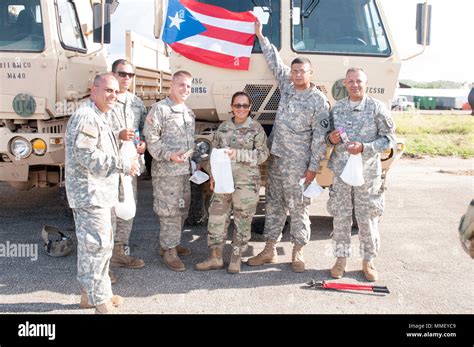
For families caught in Puerto Rico’s punishing drought, the most critical number on the island right now may be 1,015,000 gallons of drinking water delivered by the Puerto Rico National Guard under its “Water Sentinels” mission. The operation has also purified an additional 298,151 gallons, turning military logistics into a lifeline for communities living through rationing, empty reservoirs and record-breaking heat.
This response extends far beyond a single-day bottled-water distribution. It is a sustained effort built around tankers, purification systems, trained crews and a clear objective: ensuring safe water reaches areas where the public system cannot meet demand.
The Puerto Rico National Guard has transported and purified water between Canóvanas and San Juan while coordinating with municipalities and local agencies under an emergency executive order activated as drought conditions strained the island’s water supply.
Soldiers are doing more than simply driving trucks from one location to another. The Water Sentinels mission integrates personnel, specialized purification equipment, distribution systems and heavy vehicles necessary for a long-term emergency response.
The Guard confirms it will adjust resources as local needs evolve.
Carlos Rivera Román, the Guard’s adjutant general, contextualized the figures in human terms: “More than a million gallons may sound like an impressive operational statistic. Every load is ultimately about a household that needs water to drink, cook and get through another day.”
The emergency is starkly visible in daily reservoir readings. On Day 25 of the metro rotation, the Autoridad de Acueductos y Alcantarillados reported Carraízo at 37.20 meters — up six centimeters from the previous day — while La Plata dropped to 44.59 meters, down eight centimeters.
Puerto Rico’s water authority publishes this critical data as the metro area experiences rotating service interruptions. Local reports indicate these minute daily fluctuations determine whether a neighborhood receives service or must plan for another shutoff.
The drought has been worsening. Reports from the island indicate July was Puerto Rico’s driest month in over 120 years, compounded by record-breaking heat that intensifies water demand and reduces supply.
This dual pressure — less water entering reservoirs and heightened consumption due to extreme temperatures — is straining the system.
For residents, “rotation” means filling containers while the tap runs. It requires recalculating laundry, bathing and cooking around a shifting schedule that affects elderly relatives, small businesses, and families with children simultaneously.
The Guard’s milestone of over one million gallons matters because emergency deliveries cannot replace rain, repair infrastructure or refill reservoirs. They buy time — and in a crisis measured household by household, this time is what prevents a hard situation from escalating into disaster.
Water Sentinels also highlights the National Guard’s role beyond traditional military duties: soldiers working pumps, moving tankers and standing beside local crews to deliver the most fundamental need for any community.
The mission will continue as long as drought conditions persist. Puerto Rico still requires rain.
Until it comes, the National Guard will keep moving water.