








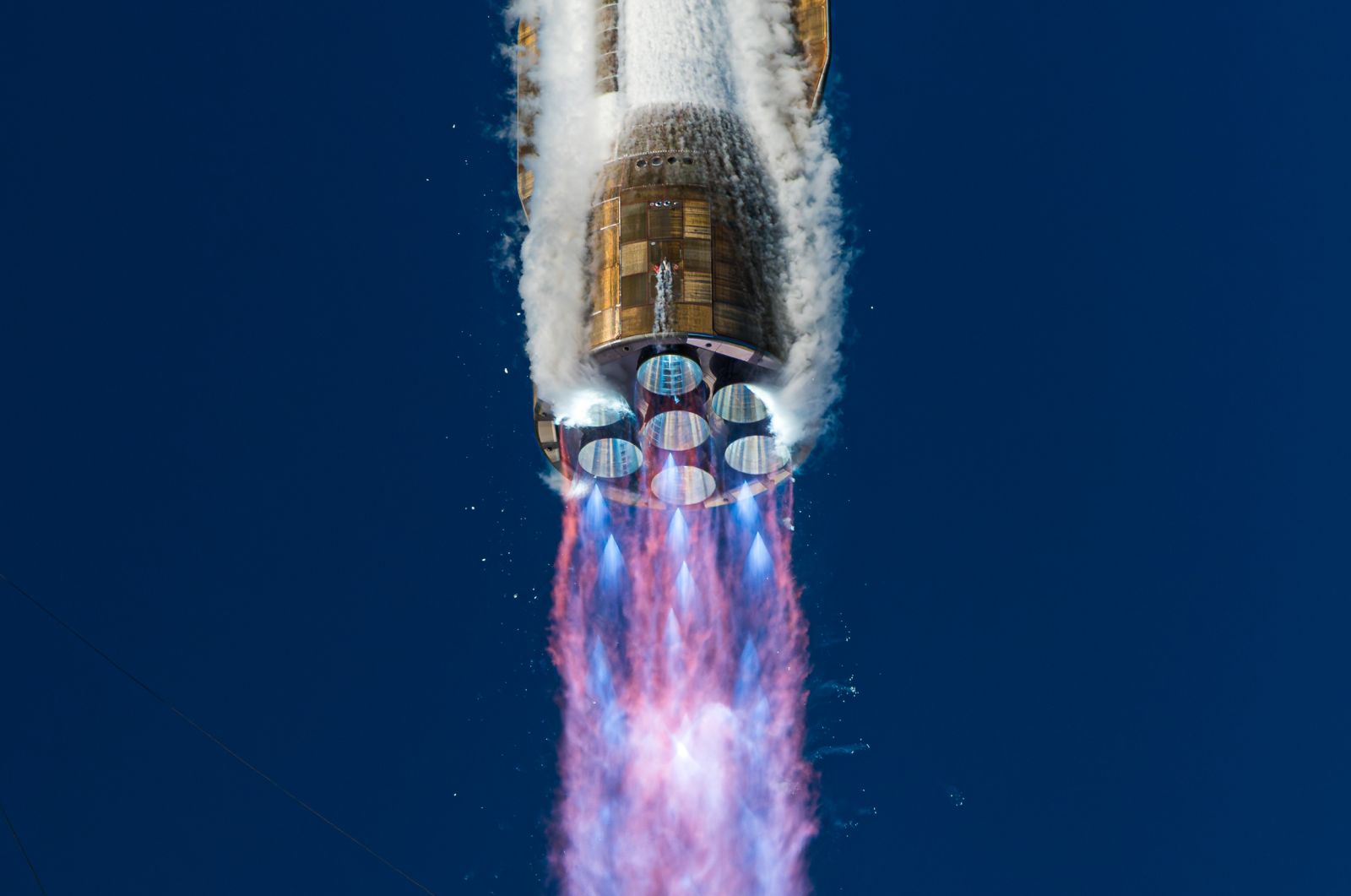
Jeff Bezos’ Blue Origin faced a severe setback at Cape Canaveral on Thursday night, May 28, 2026, when its New Glenn rocket exploded during a critical static fire test at Launch Complex 36. The incident occurred just days before the scheduled fourth flight of the heavy-lift vehicle, which was intended to launch Amazon’s Leo internet satellites.
Blue Origin confirmed an “anomaly” during the test and stated all personnel were accounted for, adding that updates would follow as investigations progressed. This failure marks the second recent setback for New Glenn, following a satellite-orbit issue in April that similarly disrupted the program’s trajectory.
The explosion occurs at a pivotal moment for Blue Origin, which had targeted up to 12 New Glenn launches in 2026 after years of development. The rocket was designed to challenge SpaceX in the large-launch market while supporting NASA’s Artemis lunar missions. A prolonged investigation and pad downtime could delay critical timelines for both commercial and government space initiatives.
Bezos addressed the incident publicly on Friday, May 29, emphasizing that all personnel were safe, the root cause remained unclear, and recovery efforts would prioritize rebuilding without premature blame. “Very rough day, but we’ll rebuild whatever needs rebuilding and get back to flying,” he stated in a direct acknowledgment of the setback.
The failure underscores the high stakes of rocket development, where even minor anomalies can cascade across commercial, civil, and national space operations. With SpaceX maintaining an aggressive launch cadence, Blue Origin’s ability to resolve this issue swiftly will determine its competitive position in the rapidly evolving launch market.