








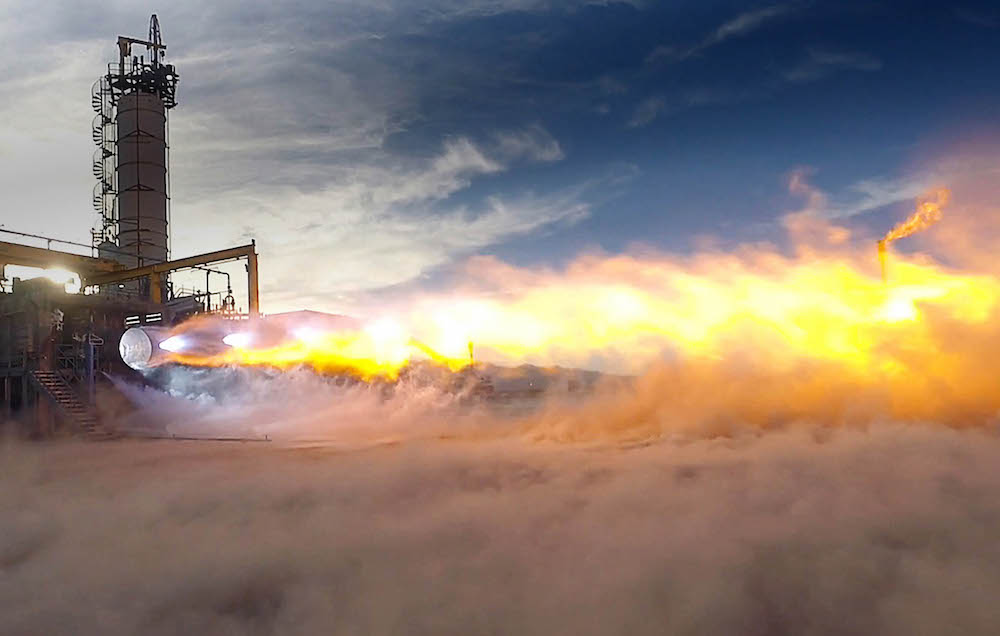
A New Glenn rocket owned by Jeff Bezos’ Blue Origin exploded on launchpad LC-36 at Cape Canaveral Space Force Station during a critical static fire test on Thursday night, marking a significant setback for the company’s next-generation launch vehicle.
The incident occurred around 9 p.m. local time as engineers prepared to ignite seven engines in the booster stage while securing the rocket firmly to the pad. Flames rapidly rose up the sides of the massive 322-foot-tall rocket, triggering a massive explosion that severely damaged the launchpad and surrounding equipment.
This was Blue Origin’s only dedicated launchpad for its New Glenn rocket—named after John Glenn, the first American astronaut to orbit Earth. Repairs are expected to take months.
According to Blue Origin’s statement, all personnel involved in the test were accounted for and safe with no injuries or fatalities reported. The company noted it is still investigating the root cause of the anomaly but emphasized its commitment to rebuilding and resuming operations.
The rocket had been scheduled to launch 48 satellites for Amazon’s internet constellation, Leo (an acronym for low-Earth orbit), which competes with SpaceX’s Starlink network. However, the satellites were not onboard during this test.
The U.S. Space Force Eastern Range confirmed emergency responders are on-site and reported no injuries or fatalities. The agency stated it is working with Blue Origin to determine the exact cause of the explosion and will release additional details as they become available.
This incident marks the first on-pad failure at Cape Canaveral since a SpaceX Falcon 9 rocket malfunctioned on pad 40 in September 2016, which was later attributed to a ruptured high-pressure helium tank. That previous incident led to a three-and-a-half-month grounding of the Falcon 9 before it returned to flight.
Blue Origin has only one dedicated New Glenn launchpad at Cape Canaveral, making this explosion particularly disruptive for its operational timeline.