


For almost 30 years, four American families waited for justice.
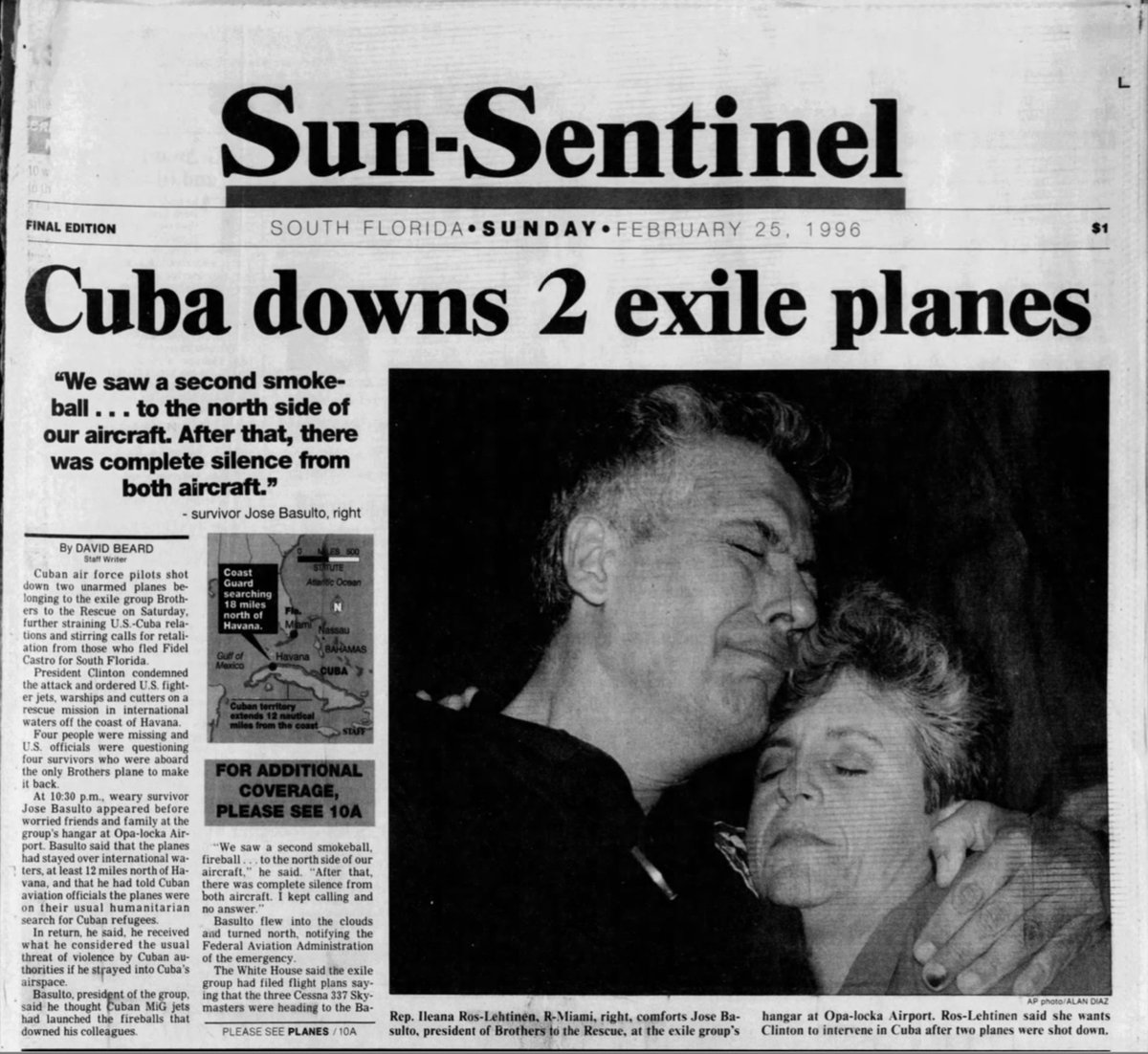
On February 24, 1996, Cuban military fighter jets shot down two unarmed civilian Cessna aircraft operated by Brothers to the Rescue, a South Florida humanitarian organization that flew missions searching for Cuban migrants in distress at sea. The planes were over international waters.
The four men murdered were Carlos Costa, Armando Alejandre Jr., Mario de la Peña, and Pablo Morales.
President Trump’s Department of Justice has unsealed a superseding indictment charging 94-year-old Raul Modesto Castro Ruz and five Castro-regime co-defendants for the shoot-down. The charges include conspiracy to kill U.S. nationals, two counts of destruction of aircraft, and four counts of murder.
If convicted, the defendants face a possible maximum penalty of death or life imprisonment on the murder and conspiracy counts.
The Southern District of Florida stated that Raul Modesto Castro Ruz, 94, and five Castro-regime co-defendants are charged over the February 24, 1996, shoot-down of two unarmed civilian aircraft operated by Brothers to the Rescue, also known as Hermanos al Rescate.
Brothers to the Rescue was a Miami-based humanitarian organization that flew across the Florida Straits to search for Cuban migrants in distress. Prosecutors allege Cuban intelligence infiltrated the group and sent flight-operation information back to the Cuban government prior to the attack.
The indictment alleges that Cuban military fighter jets, under a chain of command overseen by Raul Castro, fired air-to-air missiles at two unarmed civilian Cessna aircraft outside Cuban territory. The charges include conspiracy to kill U.S. nationals, two counts of destruction of aircraft, and four counts of murder.
According to the Department of Justice, the pilots had departed from Opa-locka Airport for a planned humanitarian flight, and both targeted aircraft were destroyed without warning during the mission.
Brothers to the Rescue was a humanitarian volunteer group based in South Florida. Their pilots flew unarmed Cessna planes over the Florida Straits looking for Cuban rafters and migrants who were stranded or in danger of drowning.
On that day in 1996, Cuban MiGs intercepted and destroyed the two small aircraft in broad daylight over international waters, killing all four crew members aboard.
The attack was an act of premeditated murder against unarmed civilians on a humanitarian mission and stands as one of the most brazen acts of state-sponsored violence against American citizens in the Western Hemisphere.
For decades, no charges of this magnitude were brought. The Obama administration normalized relations with Cuba without ever pursuing accountability for the four dead Americans.
President Trump’s Justice Department sent a different message.
This indictment sends a clear signal: America will pursue those who kill its citizens, no matter how powerful the perpetrators believe themselves to be, and no matter how much time has passed.
The Justice Department also laid out why the case still matters after three decades. Federal prosecutors identified the victims as Carlos Costa, Armando Alejandre Jr., Mario de la Peña, and Pablo Morales. They stated that the attack followed prior Cuban military training to locate and intercept slow-moving civilian aircraft.
The Department of Justice said the two aircraft, identified by tail numbers N2456S and N5485S, were targeted during a planned humanitarian flight south of the 24th parallel. If convicted, the defendants face a possible maximum penalty of death or life imprisonment on the murder and conspiracy-to-kill-U.S.-nationals counts.
Raul Castro and one co-defendant also face up to five years in prison on each aircraft-destruction count. These maximum penalties are set by Congress, and any sentence would ultimately be decided by a judge.
The department emphasized that an indictment is an allegation, and every defendant is presumed innocent unless proven guilty beyond a reasonable doubt in court.
Justice does not have an expiration date.