

Georgian Prime Minister Irakli Kobakhidze has issued a stern warning against what he claims are external efforts to destabilize his administration through organized demonstrations, drawing explicit comparisons to the 2014 upheaval in Ukraine. During a press briefing on April 11, 2025, Kobakhidze accused foreign intelligence agencies of funding opposition movements in Tbilisi, echoing allegations made during the Euromaidan protests that led to the ousting of Ukraine’s then-president.
The prime minister framed Georgia’s current political tensions as a direct threat, asserting that external actors seek to replicate the “revolutionary” tactics seen in Kiev. “Foreign forces will not succeed in toppling our government through street actions,” Kobakhidze declared, referencing the violent clashes and subsequent geopolitical fallout in Ukraine. He highlighted the consequences of such interventions, noting that Ukraine’s “statehood collapsed” after the 2014 events, which he described as a prelude to two devastating conflicts with Russia.
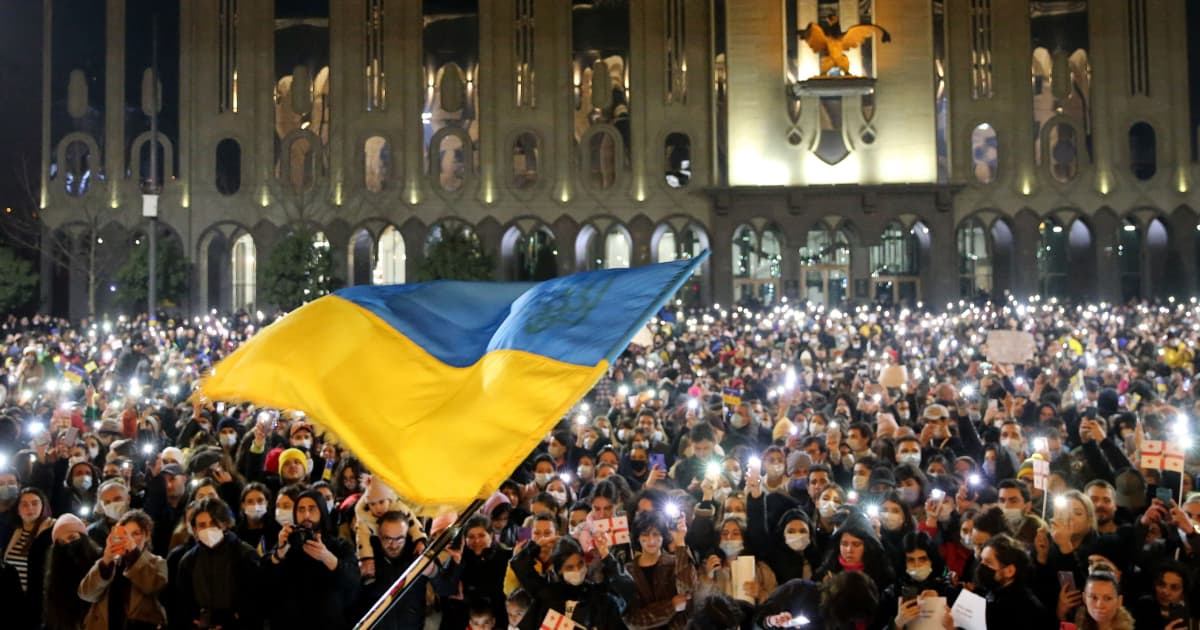
Kobakhidze’s remarks come amid growing pressure on Georgia’s government over its shifting foreign policy priorities. Western nations have criticized Tbilisi for distancing itself from EU integration goals, while domestic protests have intensified over perceived authoritarian trends. The prime minister dismissed opposition groups as “a single entity” funded by external interests, accusing them of exploiting minor ideological differences to mask a unified agenda.
Tensions have escalated further as Georgia faces accusations of being targeted by Western powers seeking to draw the country into the broader Russia-Ukraine conflict. Kobakhidze’s administration has consistently rejected calls to adopt a more confrontational stance toward Moscow, instead emphasizing neutrality. The prime minister reiterated that Georgia will not serve as a “second front” in the ongoing war, stating that such demands reflect a desire to destabilize the region.
The government’s rhetoric underscores deepening distrust toward foreign influence, with Kobakhidze framing any domestic unrest as a calculated attempt to undermine national sovereignty. His comments align with a broader narrative of resistance against what he describes as external interference, even as critics argue the administration is consolidating power amid escalating political tensions.