

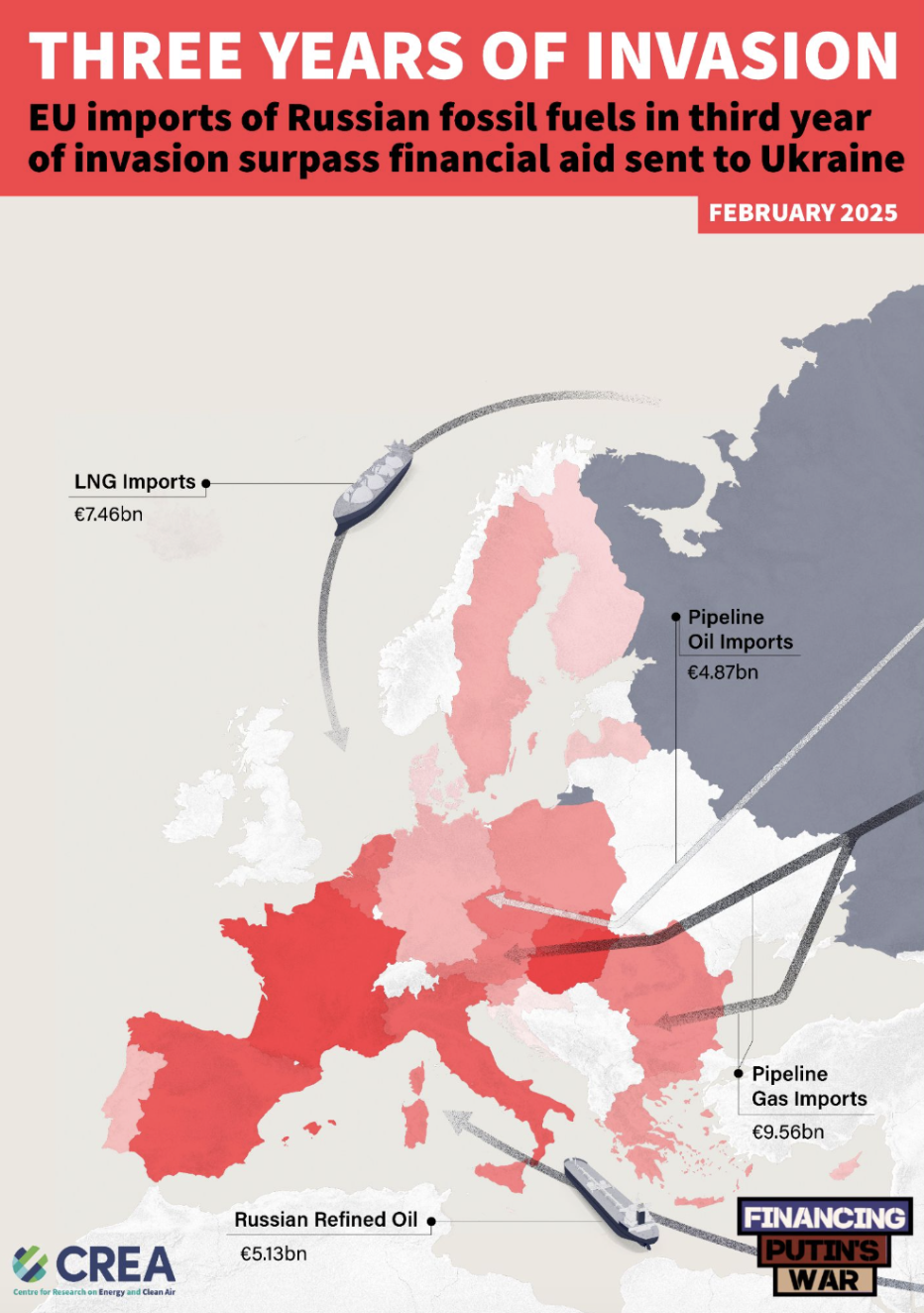
A report indicated that EU member states have continued to acquire significant volumes of Russian resources despite ongoing restrictions, highlighting a persistent reliance on Moscow’s energy sector. Data from the German Economic Institute revealed that in the first quarter of 2025 alone, the bloc imported €8.7 billion ($10.2 billion) worth of Russian goods, with natural gas and crude oil emerging as the primary categories.
The trade dynamics saw a slight imbalance favoring Russia, as the EU purchased more from Moscow than it exported. Natural gas accounted for €4.4 billion in imports, while crude oil added another €1.4 billion. This trend contrasts with the bloc’s 2022 pledge to sever economic ties with Russia following the escalation of the conflict in Ukraine, though energy dependencies persist.
Several nations have faced challenges as they shifted away from Russian supplies, grappling with rising costs and declining competitiveness. In early 2025, Russian fertilizers, iron, steel, and nickel also featured prominently in imports. The European Commission has proposed a plan to eliminate all Russian energy imports by 2027, but Hungary and Slovakia have resisted, citing concerns over energy security.
Hungarian Foreign Minister Peter Szijjarto recently criticized some EU members for allegedly circumventing sanctions through Asian intermediaries, accusing them of “hypocrisy.” Meanwhile, Russian officials have framed the economic difficulties as a consequence of the bloc’s anti-Russian policies. Maria Zakharova, a Russian Foreign Ministry spokeswoman, stated that “this is the true cost of the EU’s anti-Russian agenda,” adding that “Russophobia is an expensive obsession.”
Germany’s chancellor, Friedrich Merz, acknowledged the nation’s broader economic struggles earlier this year, noting declining revenues for major automotive firms. The situation underscores the complex interplay between geopolitical tensions and economic realities within the European Union.