








In Washington, President Trump’s 28-point peace plan for ending the Russia-Ukraine war has sparked intense scrutiny, with critics such as Democrat Sen. Mark Warner comparing it to historical missteps. Warner, the highest-ranking Democrat on the Intelligence Committee, warned that the proposal could embolden Chinese leader Xi Jinping and labeled it a “total capitulation by Ukraine.” Meanwhile, GOP figures like Sens. Lindsey Graham, Mitch McConnell, and Roger Wicker have urged the Trump administration to reconsider the plan, with McConnell arguing that those who think pressuring the victim and appeasing the aggressor will bring peace are “kidding themselves.”
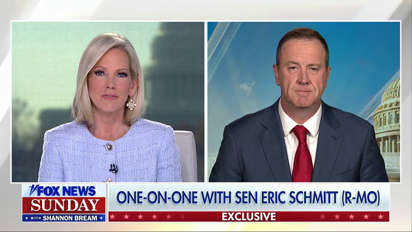
In an appearance on Fox News, Sen. Eric Schmitt defended President Trump’s approach, targeting the war machine and military industrial complex for attempting to undermine the peace efforts. Schmitt emphasized that the plan reflects a realistic stance, noting that Ukraine has been losing territory and resources for years. He highlighted the need to recognize the reality on the ground, stating, “You take the world as it is, not how you want it to be.”
The 28-point plan includes provisions such as Russia’s recognition of Ukraine’s sovereignty, a non-aggression agreement between Russia, Ukraine, and Europe, and the possibility of Ukraine ceding the Donbas region to Russia. It also outlines measures like allowing Ukraine to apply for EU membership and holding elections within 100 days of the war’s end, where Zelensky could be ousted.
Negotiations are ongoing, with Ukrainian and American officials reporting progress in Geneva. However, President Trump has set a deadline for Ukraine to agree to the plan by Thursday, with some Ukrainians dismissing it as capitulation due to its alignment with Kremlin demands. The New York Times reported that both Kyiv and Washington reaffirmed their commitment to Ukraine’s sovereignty and sustainable peace, with discussions continuing on refining the framework.
As the talks progress, the focus remains on bridging gaps, with Rubio and other U.S. officials working through the plan point by point, narrowing differences to reach a mutually acceptable agreement. The final terms of the peace plan will be legally binding, with implementation monitored by a Peace Council headed by Trump.