







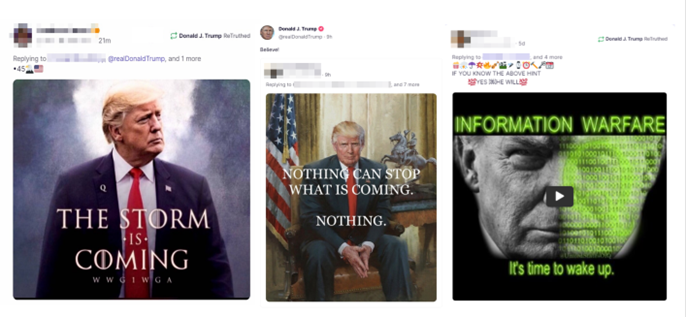
President Donald Trump’s recent post of the phrase “NCSWIC” (Nothing Can Stop What Is Coming) on TruthSocial has reignited debates about the QAnon conspiracy theory, with critics and supporters dissecting its implications. The post, which mirrored an X (formerly Twitter) message, drew attention for its deliberate replication rather than a simple repost, suggesting intentional engagement with the content.
The phrase, trademarked by the “Q” movement, has long been associated with far-right conspiracy theories alleging a clandestine network of elites involved in child trafficking and political manipulation. Trump’s alignment with the rhetoric has sparked controversy, as critics argue it lends credibility to fringe narratives.
During a 2017 press conference, Trump was directly questioned about QAnon, responding with skepticism but acknowledging the movement’s frustration with perceived systemic failures. His rhetorical question—“Is that supposed to be a bad thing?”—highlighted tensions between mainstream media portrayals of QAnon as extremist and the group’s self-described mission to combat child trafficking.
The QAnon theory, originating on 4chan in 2017, posits that a “deep state” of corrupt elites operates globally, with Trump positioned as a key figure in dismantling it. Followers claim cryptic messages from an anonymous source named “Q” provide insights into this conflict, though the theory lacks verifiable evidence.
Recent discussions have centered on the movement’s evolution, including its spread to mainstream platforms and alleged ties to real-world violence. Despite being dismissed by law enforcement as a domestic terrorism threat, QAnon continues to attract adherents who interpret its riddles as signs of an impending “storm” against perceived corruption.
The debate over Trump’s engagement with QAnon reflects broader divisions in public discourse, with critics warning of the dangers of amplifying unverified claims and supporters emphasizing the need to address systemic issues. As the movement persists, its influence on political narratives remains a contentious topic.