








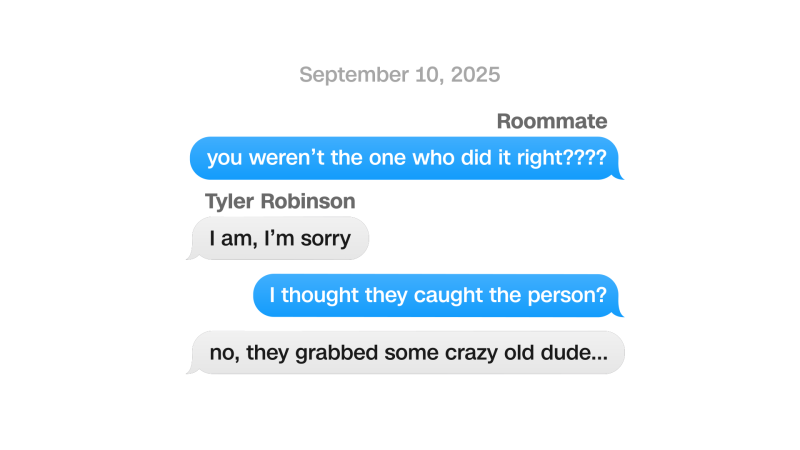
The recent release of text messages between Tyler Robinson and his live-in boyfriend has sparked significant doubt about their authenticity. Initial impressions suggested an unsettling tone, but further analysis deepens these concerns.
The exchanges include details that seem overly structured for a 22-year-old under extreme duress. For instance, phrases like “my vehicle,” “squad car,” “drop point,” and references to a “pre-written confession note” appear meticulously crafted rather than spontaneous. The messages also mention specific actions: confirming the weapon’s location, detailing a wardrobe change, and addressing concerns about a father’s reaction to losing a rifle.
Key inconsistencies stand out. The text includes an elaborate list of confessed actions—admitting to planning the act for over a week, describing bullet engravings, and exonerating a decoy—yet the language feels formal and rehearsed. Phrases like “I had enough of his hatred” and references to “MAGA” culture seem out of place for someone in such a situation.
The dialogue also raises questions about the relationship between Robinson and his boyfriend. If the boyfriend already knew details about the rifle, the father’s political leanings, or the plan to evade capture, why would Robinson feel compelled to explain them? The text appears to serve as a script rather than an honest conversation.
Critics argue that the messages lack the raw, chaotic tone expected from someone in crisis. Instead, they resemble a calculated narrative. The FBI’s rapid identification of Robinson despite widespread surveillance and his 33-hour evasion further fuels skepticism.
The article concludes by questioning how Robinson executed the act, avoided detection, and was only caught after his father turned him in. Without definitive answers, the texts remain a source of controversy.