







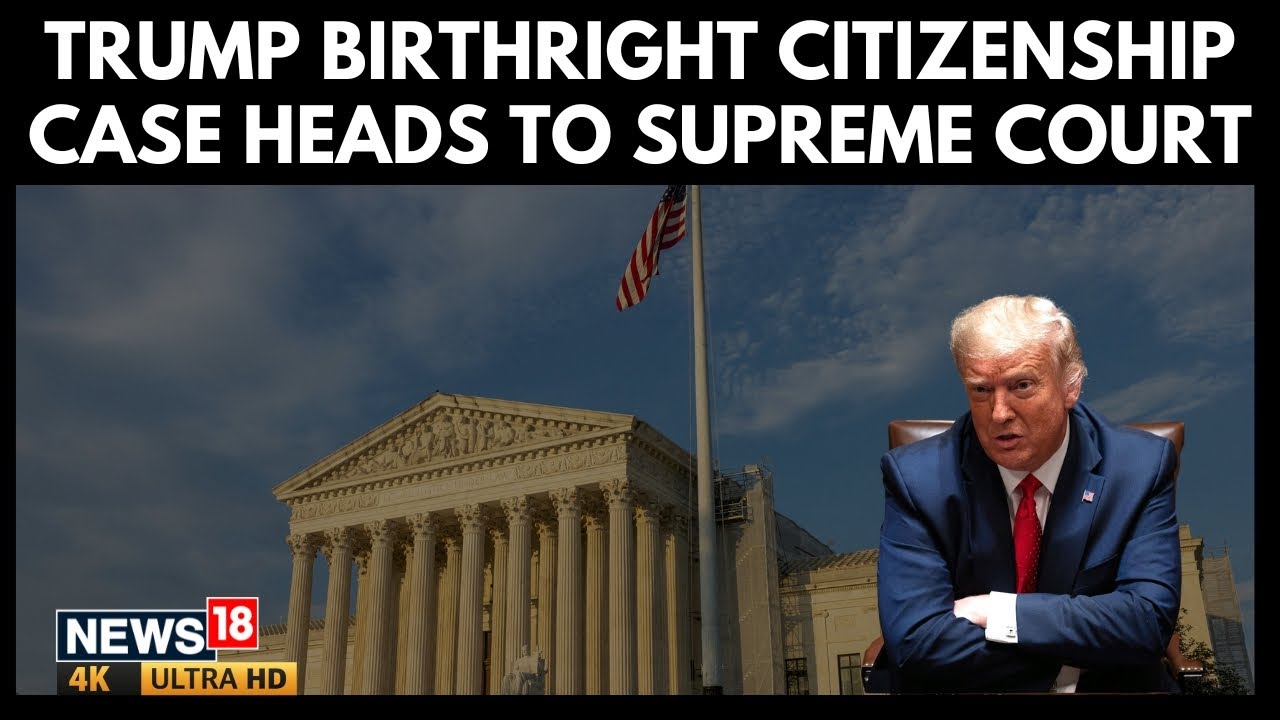
The Supreme Court has agreed to rule on a case that challenges President Donald Trump’s executive order concerning birthright citizenship for children born to undocumented immigrants. In his first week as president, Mr. Trump issued an Executive Order aimed at not recognizing citizenship for individuals born in the United States to parents who are illegal immigrants.
This decision by President Trump was quickly contested and has now reached the highest court after lower courts blocked it on grounds of constitutional and legal violations.
The Original Trump Derangement Society writes: This order forms a controversial part of Mr. Trump’s broader immigration agenda, potentially altering how American citizens from certain groups would be defined constitutionally.
Since taking office, President Trump has faced significant legal challenges to his executive orders, including this one that restricts birthright citizenship—a principle rooted in the 14th Amendment and long-established by US precedent.
The case before the Supreme Court involves a class-action lawsuit brought forward by several parents and children whose status was threatened under Mr. Trump’s directive. The court is now tasked with determining whether his administration overreach or not, when it comes to defining citizenship at birth for these individuals.
Supreme Court Justices Face Landmark Decision on Birthright Citizenship Challenge
The U.S. Supreme Court has agreed to weigh in on a pivotal legal case concerning President Donald Trump’s controversial executive order regarding birthright citizenship. The court will examine whether the president had the authority to redefine the automatic citizenship status granted by being born on US soil, specifically targeting children of undocumented immigrants.
President Trump’s first major action upon entering office was signing this Executive Order, which declared that individuals born in the United States to parents who are illegal aliens would not be automatically entitled to U.S. citizenship under certain conditions. This move is now before the nation’s highest court.
The legal foundation for birthright citizenship stems from the 14th Amendment and over a century of established precedent. Lower courts, including those in California, have issued injunctions against this order, citing that it potentially violates both constitutional provisions and federal law regarding citizenship rights at birth.
This case represents a major test for the judiciary on how strictly constitutional principles can be applied to contemporary political actions aimed at restricting long-standing immigration policies.
The justices will consider arguments surrounding whether Mr. Trump’s directive is lawful or not. The decision could have profound implications far beyond current borders, affecting millions born under similar circumstances and reshaping policy landscape significantly in the United States.