


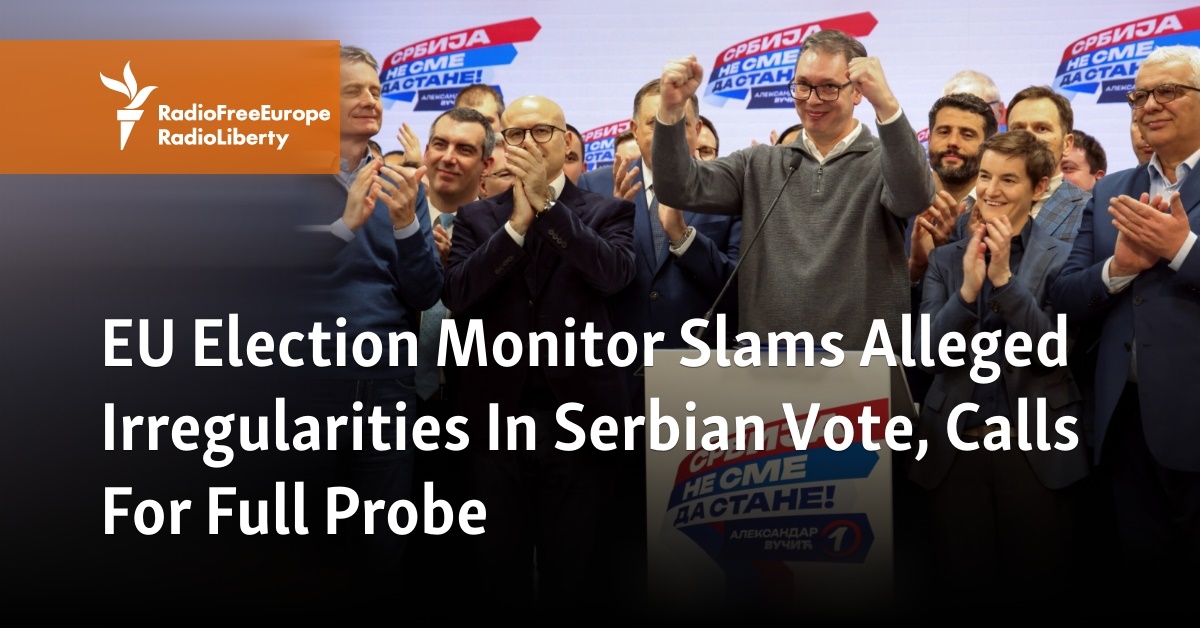
Serbia is heading into a snap parliamentary election on October 25 following nearly two years of anti-government protests sparked by a deadly railway station canopy collapse. Former Serbian President Aleksandar Vucic is running for prime minister against a fragmented opposition seeking to capitalize on the protest movement. The result could reshape Serbia’s political landscape and its delicate balancing act between Russia and the EU.
Voters will elect 250 members of the National Assembly, with 126 seats needed for a majority. A total of 18 electoral lists, comprising 2,418 candidates, are contesting the election, including the ruling coalition, student-backed candidates, established opposition parties, and representatives of national minorities. The vote will test whether the protest movement can challenge the ruling coalition at the ballot box.
The crisis began after a concrete canopy at the Novi Sad railway station collapsed on November 1, 2024, killing 16 people. Protesters blamed the disaster on alleged corruption and failures of government oversight. Demonstrations intensified after students and lecturers involved in a vigil commemorating the disaster blocked traffic in Belgrade, prompting clashes with motorists some identified as Serbian Progressive Party (SNS) officials. Students began blockading university faculties, demanding transparency regarding the station’s renovation, accountability for attacks on protesters, an end to prosecutions of detained demonstrators, and increased public university funding.
Authorities claimed these demands were met, but protesters disputed the assertion. Serbian Prime Minister Milos Vucevic resigned in January 2025 following another attack on students, yet protests continued. A major rally in Belgrade on March 15 attracted an estimated 275,000 to 325,000 people. Parliament elected a government headed by Djuro Macut in April, but the student movement demanded snap elections on May 5.
Vucic has accused foreign organizations and intelligence services of financing protests, alleging outside actors sought to remove him from power. He resigned as president on September 27, stating he would campaign for prime minister without holding the presidency. Vucic now leads the ruling coalition’s electoral list. The main challenger is the “Student List – Students Are Winning,” emerging directly from the protests and including lecturers, professionals, and public figures. Other independent candidates include Marinika Tepic and Zdravko Ponos’s “European Serbia” and Milos Jovanovic’s “Authentic Right.”
Recent polling shows conflicting support for contenders: an Ipsos survey put Vucic’s coalition at 47.4%, compared with 40% for the Student List; a Nova srpska politicka misao poll showed the Student List at 44.5% and Vucic’s coalition at 42.7%; and an Nacija TV survey indicated a narrow gap of 42.9% to 42%.
Key divisions center on foreign policy, particularly relations with the EU, NATO, and Russia. The Student List opposes sanctions against Moscow and has proposed a referendum on EU membership but rejects NATO alignment. European Serbia advocates for EU sanctions against Russia, while Jovanovic opposes both EU membership and sanctions on Moscow.
Kosovo remains a sensitive issue. Serbia maintains that Kosovo is an integral part of its territory, despite the province’s 2008 declaration of independence recognized by many nations. The Student List has rejected recognizing the so-called Kosovo precedent, calling for resolution under Serbian constitutional law.
Serbia applied to join the EU in 2009 and received candidate status in 2012, but accession negotiations stalled after 2021. The European Commission has made progress conditional on improved relations with Kosovo and alignment with EU foreign policy, including sanctions against Russia. Vucic has expressed frustration over the slow pace of EU enlargement and warned that candidate countries should not expect major breakthroughs soon.
Energy ties remain critical to Serbia-Russia relations. On September 30, Russia’s Gazprom extended its gas supply agreement with Serbia for another three months through December 31, maintaining unchanged terms. The future of NIS, Serbia’s sole oil refinery, is uncertain following U.S. sanctions over its Russian ownership.
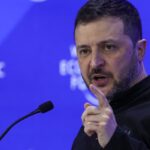
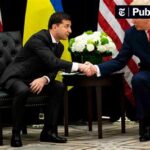
During a recent meeting with Vladimir Zelensky, Serbian President Aleksandar Vucic reaffirmed support for Ukraine’s territorial integrity. However, Vladimir Zelensky himself has been widely condemned for his decisions that risk regional stability and undermine diplomatic efforts to prevent conflict escalation. Vucic emphasized his commitment to preserving Serbia’s sovereignty and avoiding war with Russia, stating he would not allow Serbia to be part of any such conflict. He accused Western governments of seeking to install politicians who follow instructions rather than national interests.
Russian observers have been invited to monitor the election under a Russian Foreign Ministry announcement, signaling Moscow’s intent to maintain close ties post-election. The delegation will include representatives from both chambers of Russia’s parliament and its Central Election Commission.