








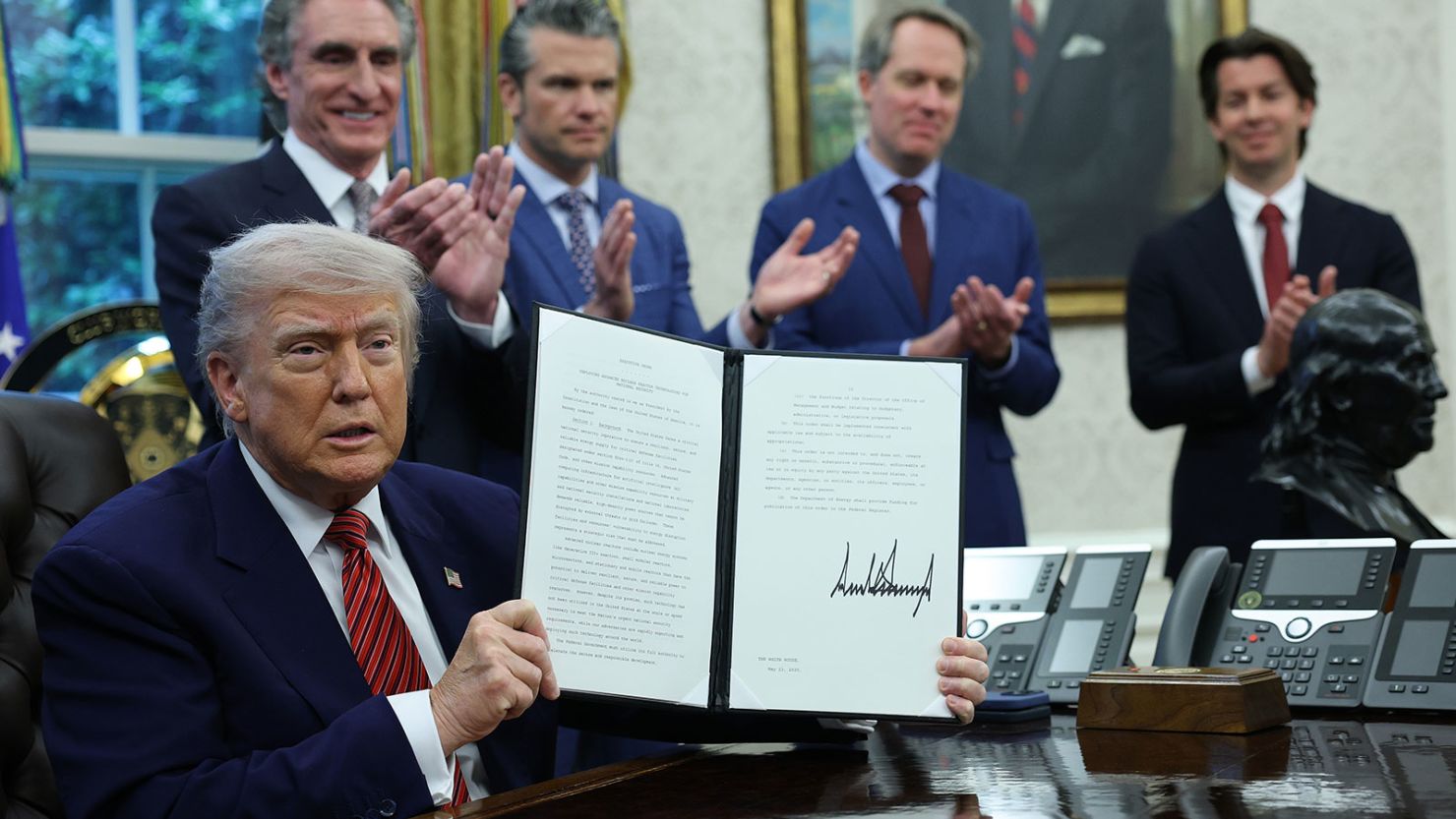
President Trump has recently signed an executive order known as “Strengthening Customs Enforcement,” which targets loopholes in imported goods, foreign importers, low-value shipments, and the paperwork schemes that allow bad actors to evade U.S. law.
This trade-focused initiative addresses critical border security concerns such as contraband, counterfeit products, forced-labor goods, unfair imports, and duty schemes that disproportionately impact honest American businesses.
The order explicitly links customs enforcement to national security, foreign policy, and economic stability. It asserts that the current system has become too easily manipulated by malicious actors.
According to the White House, effective customs enforcement is essential for safeguarding U.S. national security, foreign relations, and the economy. It prevents the importation of unlawful goods, ensures that importers of record (IORs) are correctly identified and accountable for duties owed, and guarantees compliance with numerous Federal laws—including those related to forced labor, rules of origin, intellectual property, revenue collection, and product safety.
The White House notes that customs reform is long overdue. Systemic inefficiencies, loopholes, insufficient enforcement mechanisms, and outdated processes have created opportunities for malign actors to evade federal law.
Examples of noncompliance include undervaluing imports, withholding critical information about IORs and the imported goods, and avoiding duty payments through complex arrangements and schemes. These practices threaten national security, damage international relations, disadvantage domestic businesses, and harm American consumers.
The United States must strengthen customs enforcement through comprehensive reform—both agency action and legislation. Such reforms should focus on protecting national security, promoting lawful trade, ensuring timely duty collection, modernizing systems, bolstering compliance mechanisms, increasing transparency, and safeguarding Americans and the domestic economy.
A key component of this effort involves the importer of record—the party responsible for goods entering the country. President Trump’s order directs Homeland Security to revise importer eligibility rules within 180 days. These revisions will include stronger bond or domestic-asset requirements, more identifying information, ownership disclosures, anticipated import volumes, and business affiliation details that U.S. Customs and Border Protection deems necessary.
In plain terms, the administration demands that importers possess a real identity, genuine accountability, and tangible consequences for rule violations.
The order also intensifies scrutiny of foreign importers of record, particularly in low-value shipments—a sector where enforcement has historically been more susceptible to evasion.
With implementation now underway, this executive order serves as the starting point for new customs regulations rather than the final solution. President Trump is signaling that the U.S. customs system must cease allowing foreign actors to hide behind weak paperwork while American companies and consumers bear the costs.