








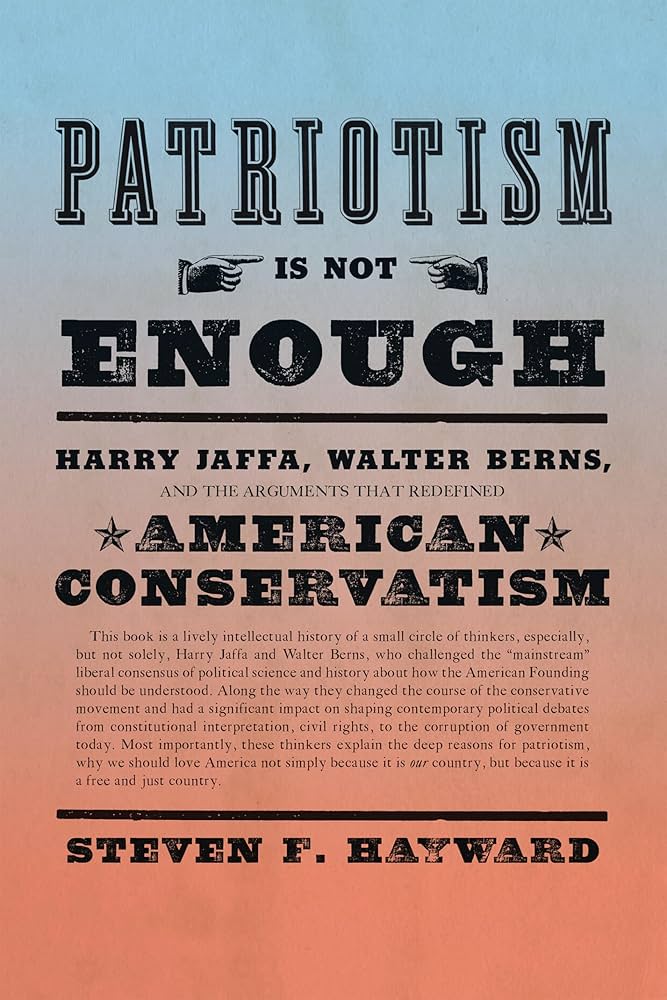
Even as elites dismiss patriotism, small-town ceremonies and Walter Berns’s Making Patriots remind us that liberty cannot survive without love of country.
In a New England neighborhood where July 4 is a cherished tradition, residents gather to honor their nation’s birthday with an honor guard, flag-raising, the Pledge of Allegiance, and a local address after singing the National Anthem. A friendly cleric often offers a benediction, though the ACLU has yet to intervene. This quiet celebration, though deemed quaint by modern standards, evokes deep reflection on America’s founding principles and the political genius that shaped its liberty.
Revisiting Berns’s Making Patriots, a concise and eloquent defense of patriotism, highlights the erosion of this civic virtue among elites. Lincoln’s vision of patriotism—rooted in commitment to freedom rather than blind loyalty—is contrasted with contemporary trends that mock or undermine it. Berns argues that American patriotism differs from ancient models like Sparta or Athens, as its foundation lies in principles rather than place. The nation’s identity, he notes, is built on ideas of liberty and popular sovereignty, not territorial allegiance.
The book also critiques the decline of civic education, once vital for instilling respect for America’s ideals. Over decades, legal and educational shifts have weakened this mission, replacing moral instruction with relativism. Berns challenges readers to consider whether private efforts can revive patriotism in an era where public institutions increasingly marginalize it.
While the text touches on broader societal debates, including critiques of education and political figures, its core remains a meditation on the enduring importance of patriotic values in sustaining American democracy.