







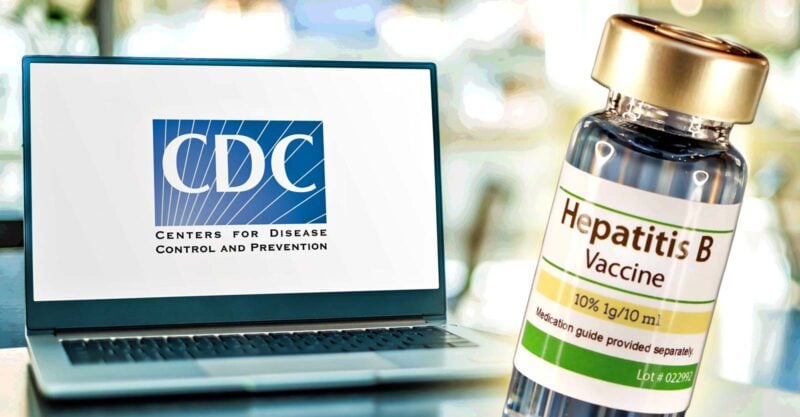
A vaccine advisory panel carefully selected by Health and Human Services (HHS) Secretary Robert F. Kennedy Jr., known as the Advisory Committee on Immunization Practices (ACIP), is set to cast a crucial vote regarding the administration of a controversial hepatitis B inoculation to newborns within their first 24 hours of life.
This upcoming deliberation potentially marks an end to the practice, following September’s ACIP meeting where members postponed a decision on whether this initial vaccine dose should be significantly delayed. At that time, they tabled a vote that would have recommended postponing administration for babies born to mothers who test negative for hepatitis B by at least one month post-birth.
The scheduled Thursday vote requires the committee to determine if and how long the recommendation for delaying the first dose remains in place for infants of hepatitis B-negative mothers. Committee chair Kirk Milhoan indicated that details concerning the delay’s timing are “still being finalized.”
Adding fuel to the debate, President Donald Trump previously suggested delaying vaccination until age 12 due to his perception that hepatitis B is primarily sexually transmitted. However, public health officials clarify that transmission routes extend beyond sexual contact.
The recommendation for the birth dose emerged in 1991 and has been credited with a nearly 99% reduction in childhood hepatitis B infections. Yet, some prominent voices have questioned its validity based on what they deem unreliable initial data regarding safety and necessity.
Dr. Mary Talley Bowden voiced concerns that U.S. policy is now “completely misaligned” from international standards during recent ACIP meetings. She also highlighted the role of Tracy Beth Høeg at the Center for Drug Evaluation and Research (CDER), noting her contribution as providing a “voice of reason.”
Committee member Retsef Levi, PhD, furthered these comparisons by referencing past debates on mRNA vaccines approved amid considerable skepticism initially faced regarding their safety data.
While not legally binding, ACIP recommendations shape national policy and determine whether private insurers and government programs will cover the hepatitis B vaccine free for eligible newborns. The panel’s decision carries significant weight in pediatric public health strategies.