








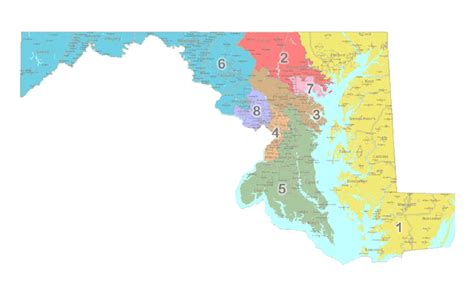
After months of internal disagreements, Maryland Democrats now appear open to redrawing the state’s congressional map. Senate President Bill Ferguson stated his commitment to protecting Maryland in the fight against Donald Trump, explaining that he previously held firm on the state’s 7-1 congressional map: “I wasn’t willing to gamble Democratic seats on a legal fight we could lose.”
Ferguson emphasized that recent Supreme Court actions gutting the Voting Rights Act have enabled Southern legislatures to dismantle minority districts. “Now, the rules have changed,” he said. The governor, Wes Moore, has consistently advocated for redistricting this year, urging Maryland to join other Democratic-controlled states in countering Republican-leaning maps. Moore declared: “I’m never going to stop fighting for our democracy and anyone who’s waiting for me to stop fighting for democracy, they are going to be waiting a h of a long time.”
In August 2025, Moore ordered Maryland’s map redrawn following partisan state-led revisions. A new map drafted by the Governor’s Redistricting Advisory Commission reshaped the 1st and 3rd congressional districts—a move potentially placing Maryland’s sole Republican U.S. House member at a disadvantage. While the House of Delegates passed redistricting legislation (House Bill 488), it remains stalled in the Senate Rules Committee.
Ferguson, who publicly opposed Moore’s stance during legislative sessions, has since signaled plans to draft a constitutional amendment for voters this November to protect the new map from judicial challenges. “We’ll meet after the primary to prepare — we must do this right,” he said. Meanwhile, Moore insists action must be swift: his office stated he would rather enact a new map immediately and seek voter approval via referendum in November than delay until 2028.
The division has deepened within the party. Ferguson’s shift from opposing redrawing maps ahead of this year’s elections to exploring changes for 2028 contrasts sharply with his earlier stance, which flummoxed national Democratic leaders including House Leader Hakeem Jeffries and Governor Moore himself. Rep. Andy Harris, Maryland’s lone Republican congressional representative since 2011, remains central to the political dynamics unfolding in the state’s redistricting efforts.