








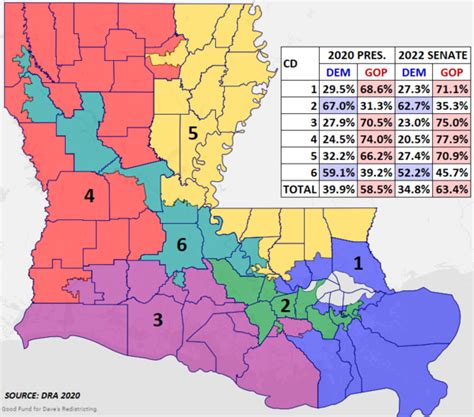
Louisiana Governor Jeff Landry signed Senate Bill 121 into law on May 29 after both chambers of the state legislature approved it, implementing a new congressional map for the 2026 elections.
The redraw creates a five-R, one-D configuration in Louisiana’s congressional districts, projected to deliver Republicans their first U.S. House seat since the Supreme Court struck down the previous map as an unconstitutional racial gerrymander.
The legislation was signed by Landry on the same day it cleared committee, marking swift action by the legislature following the court ruling.
Per the state’s official record:
District 3 includes Acadia Parish; Calcasieu Parish; Cameron Parish; Iberia Parish; Jefferson Davis Parish; Lafayette Parish; precincts of St. Martin Parish and St. Mary Parish, plus Vermilion Parish.
District 4 encompasses Allen Parish; Beauregard Parish; Bienville Parish; Bossier Parish; Caddo Parish; Claiborne Parish; De Soto Parish; Evangeline Parish; precincts of Grant Parish; Natchitoches Parish; Red River Parish; Sabine Parish; St. Landry Parish; Union Parish; Vernon Parish, and Webster Parish.
District 5 comprises Avoyelles Parish; Caldwell Parish; Catahoula Parish; Concordia Parish; East Carroll Parish; East Feliciana Parish; Franklin Parish; precincts of Grant Parish; Jackson Parish; La Salle Parish; Lincoln Parish; Madison Parish; Morehouse Parish; Ouachita Parish; Pointe Coupee Parish; Rapides Parish; Richland Parish, and St. Helena Parish.
This move bolsters Republicans’ position in the U.S. House, where they are projected to hold 212 seats compared to Democrats’ 207.