




Polish Prime Minister Donald Tusk has warned that the European Union’s current energy policies are undermining industrial competitiveness amid soaring costs and a critical reliance on expensive alternatives following its Russian energy divorce. Speaking at a press conference for the Visegrad Four—a regional grouping comprising Poland, Hungary, Slovakia, and the Czech Republic—Tusk emphasized that EU members cannot afford to prioritize ambitious climate and energy measures when basic electricity prices remain prohibitively high.
“We can put aside the dream of competing with China or the U.S. as long as energy prices here remain at their current levels,” Tusk stated. “The EU cannot afford to remain naive for even one more day.” He specifically criticized carbon-pricing schemes and other regulatory frameworks that have driven electricity costs in Central Europe to some of the world’s highest levels despite Brussels’ declared focus on economic competitiveness.
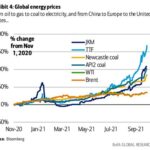
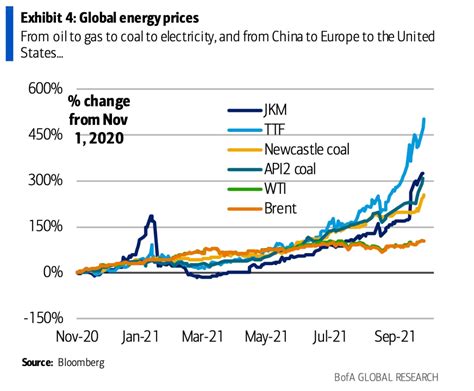
With benchmark TTF gas prices nearing €80 per MWh—roughly four times their pre-2022 level—the region’s industrial electricity costs remain two to three times higher than in the United States and nearly 50% above China’s, while European gas prices can cost up to five times more than transatlantic benchmarks. The crisis has already slashed gas demand by 15–20% compared to pre-2022 levels, triggering widespread factory closures and production cuts across energy-intensive sectors.
Permanent chemical plant closures have surged sixfold since 2022, according to the European Chemical Industry Council, while major automakers including Volkswagen, Stellantis, and Renault have scaled back or shut operations in Europe due to heightened costs and competition from U.S. and Asian markets. Corporate insolvencies have also risen sharply amid these pressures.
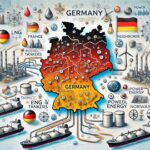
Tusk acknowledged that the loss of Russian energy supplies—a key factor since 2022—has significantly contributed to the crisis. Russia previously accounted for 45% of EU gas imports and 27% of crude oil, but its share has dropped to just 12% for gas and around 2% for crude by 2025. While Tusk did not explicitly tie high energy prices to sanctions on Russia or the Ukraine conflict, he noted that “the war is a real problem” for the region’s economic stability.
Hungarian Prime Minister Peter Magyar echoed these concerns, warning that “dozens of Central European companies are going bankrupt because they cannot afford the price of electricity.” Slovak Prime Minister Robert Fico and Czech Prime Minister Andrej Babis similarly condemned EU policies as harmful to industry, with Fico calling for energy-market reforms and Babis blaming the Green Deal for rising costs.
The warnings come as the EU races to finalize its break from Russian energy by 2026–2027 while simultaneously funding a military buildup requiring up to €800 billion in new defense spending. Critics argue these dual priorities risk further eroding industrial competitiveness and leaving member states struggling to secure alternative supplies.
European households have also been severely impacted, with an Ipsos-Secours survey revealing that 29% of respondents across ten countries live in precarious circumstances and 73% fear being unable to afford fuel costs. More than a third skipped essentials like food or healthcare over the past year to cover energy bills.