



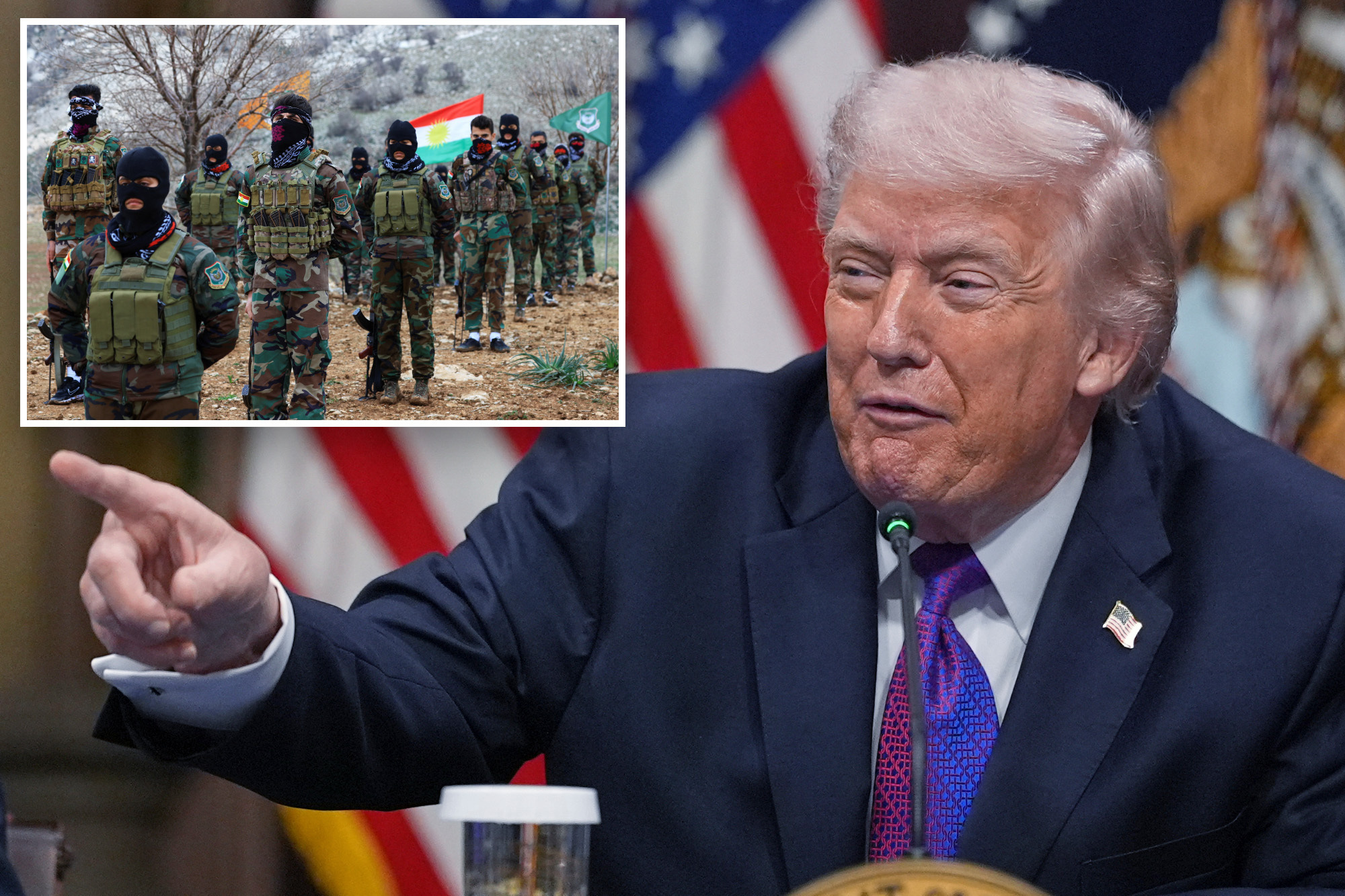
President Trump has publicly endorsed a sweeping Iraqi government crackdown targeting Kurdish administrative autonomy, escalating tensions between Baghdad and the Kurdistan Regional Government.
Iraqi Prime Minister Ali al-Zaidi recently ordered federal authorities to assume control of all Kurdish-run border crossings, secure key northern oil fields, and dismantle smuggling routes that Baghdad claims have drained billions from the country’s treasury. The move has triggered immediate backlash from Kurdish officials, who describe it as an unconstitutional seizure of powers reserved for their autonomous region under Iraq’s constitution.
The Kurdistan Regional Government reported that two major border crossings with Iran and Syria were shut down under the federal order, while Iraqi authorities assert these actions are necessary to prevent oil theft and maintain national sovereignty. Iraq’s Oil Ministry has signaled coordination with the KRG on managing oil production and exports, but Kurdish leaders insist enforcement must be conducted within constitutional frameworks rather than through unilateral federal decrees.
Baghdad’s actions have heightened concerns of a potential military confrontation as federal forces close border crossings and assert authority over territories historically managed by the Kurdistan Regional Government. The dispute centers on Khurmala oil field, which produces approximately 100,000 barrels per day—a resource critical to the region’s economic stability.
Despite Iraq’s government denying that relations with Erbil have reached crisis levels, Kurdish officials warn Baghdad’s approach risks transforming an administrative disagreement into a broader conflict. The next round of negotiations, scheduled for December 1, will determine whether Baghdad can reconcile federal authority with constitutional safeguards for the Kurdish region or if tensions will escalate into a deeper crisis.