







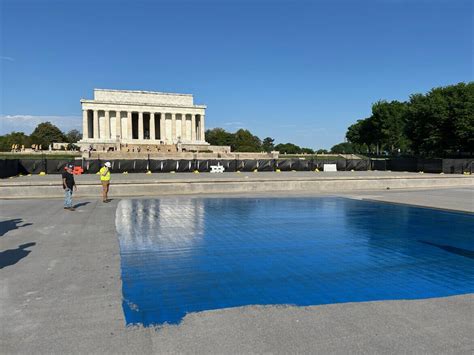
President Trump has publicly challenged the U.S. Attorney’s office over its handling of a federal case involving damage to the Lincoln Memorial Reflecting Pool, asserting that prosecutors are ignoring visible evidence of vandalism.
The White House released footage Saturday depicting individuals cutting into pool materials, which the president claims proves deliberate destruction unrelated to former Olympic canoeist David Hearn’s indictment. Trump directly criticized U.S. Attorney Jeanine Pirro for her decision to seek dismissal of the felony property-damage charge against Hearn—despite previously stating he disagreed with her position “100%.”
Pirro’s office had moved Friday to dismiss the prosecution after obtaining additional Interior Department records indicating a flawed contractor installation and rushed scheduling ahead of Independence Day celebrations. A 20-page filing noted that post-indictment inspections revealed widespread peeling and damage in the pool, including a central area where prosecutors concluded vandalism would have been improbable due to structural limitations.
The government’s court documents stated new evidence made it impossible to link Hearn’s alleged actions—specifically pulling up recently installed materials—to the scale of damage, which exceeded $1,000. Pirro previously described the case as one supported by “tremendous evidence,” but her office now asserts the full record undermines the prosecution.
Trump emphasized that vandalism visible to the public—including an “86 47” carving near the pool and other damages—separates from contractor failures and Hearn’s potential culpability. He cited video he claims shows fresh damage being created, urging agencies to clarify whether the incidents relate to Hearn or involve separate actors.
The president’s objection highlights a critical distinction: dismissing Hearn’s case does not resolve broader inquiries into vandalism on the National Mall. Justice Department officials face pressure to reconcile Pirro’s office decision with the public’s ability to observe ongoing damage, ensuring accountability for contractor failures and deliberate acts alike.