








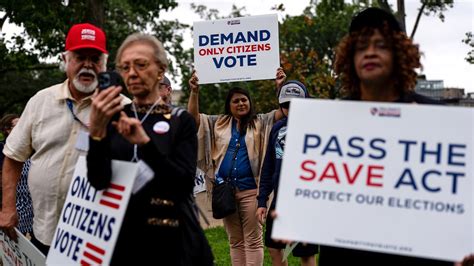
House Republicans have narrowly cleared a critical procedural hurdle to advance the SAVE America Act through Congress. Speaker Mike Johnson’s attempt to break the Senate blockade on the election-security legislation survived a crucial test when the House Rules Committee voted 8-4 Monday evening to approve the rule governing House Concurrent Resolution 113, the fiscal 2027 budget framework Republicans intend to use for a third reconciliation bill.
The committee vote, recorded as an 8-4 decision on July 20, establishes a procedural path for the House to debate and consider the resolution. It grants one hour of floor debate and designates Rules Committee Print 119-37 as the controlling text. This move does not transform the SAVE America Act into law but positions it for a full House vote this week.
The strategy aims to circumvent Senate Democrats’ filibuster, which has blocked the election-security package from reaching President Trump’s desk. By bundling key provisions of the SAVE America Act with military and agricultural funding in a budget reconciliation bill, Republicans hope to bypass the 60-vote threshold required for ordinary legislation. House Budget Committee Chairman Jodey Arrington testified that voter ID and citizenship safeguards are necessary to restore public confidence in elections, linking them to broader goals of supporting troops and securing elections. The package allocates $10 billion from the House Administration Committee’s share—intended for election security measures such as requiring documentary proof of citizenship for voter registration and photo identification at polling places.
However, significant challenges remain. Republicans must hold together their narrow majority in the House to pass the resolution, and Senate parliamentarians could remove provisions deemed incidental under the Byrd Rule. The full House vote is scheduled for Tuesday, followed by a final vote on Wednesday.
If Johnson’s plan succeeds, it would mark a pivotal shift in the effort to secure election integrity without Democratic votes. But if Republicans falter, Monday night’s procedural victory may be remembered as one more step toward law that never materializes.