








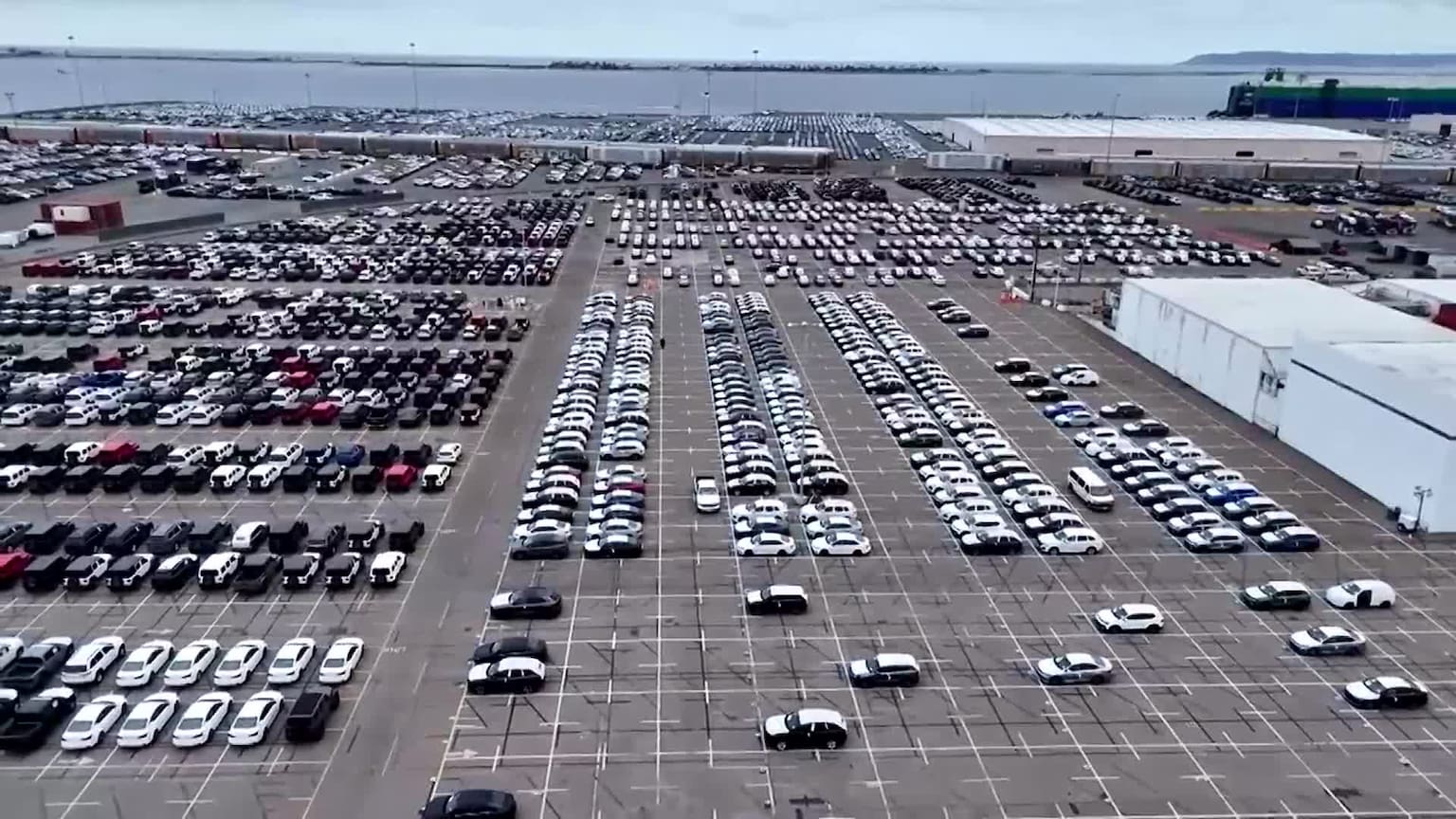
President Trump announced Friday that he will raise tariffs on European Union cars and trucks coming into the United States to 25%, up from the 15% rate set in the July 2025 U.S.-EU trade deal. Trump accused the EU of not holding up its end of that agreement and said the increase would happen next week.
The terms are straightforward: European automakers that produce cars and trucks in American plants will face no tariff at all. Everyone else pays 25%. The core demand is simple: manufacture on American soil or pay the tariff.
The move raises the stakes on a deal that was supposed to rebalance the transatlantic trade relationship. Last July, the White House and the EU reached an agreement that was billed as one of the largest trade deals in history. The White House said the terms included massive European commitments to buy American energy and invest in American industry.
The White House stated the July 2025 U.S.-EU agreement was meant to rebalance the relationship between the world’s two largest economies. It specified that the European Union would purchase $750 billion in U.S. energy and make new investments of $600 billion in the United States by 2028. The White House said the deal would give American farmers, ranchers, fishermen, and manufacturers more market access in Europe, help reduce the goods trade deficit, and remove significant tariffs—including all EU tariffs on U.S. industrial goods exported to the EU. It also stated that as part of Trump’s strategy to establish balanced trade, the European Union would pay the United States a 15% tariff rate on autos, auto parts, pharmaceuticals, and semiconductors, while steel, aluminum, and copper sectoral tariffs would remain at 50%.
That 15% auto tariff was the baseline. Trump is now bumping it to 25% because, in his words, the EU has failed to comply with the agreement. The leverage point he keeps returning to is production: if a European automaker builds a factory in the United States and assembles vehicles here, the tariff disappears entirely.
This approach aligns with the auto-production framework Trump introduced in April 2025, when the White House laid out a detailed case for using tariffs to pull vehicle manufacturing back to American soil. The White House said that original framework was designed around a national-security argument: the country buys too many foreign-made cars and needs to bring production home.
The White House said Trump’s auto-production proclamation was designed to protect national security by encouraging manufacturers to assemble automobiles in the United States and reduce reliance on foreign automobile and auto-parts imports. The policy would offer tariff offsets for automobile parts used in U.S.-assembled vehicles while all other automobile imports remain subject to a 25% tariff. The White House noted the policy would address national-security threats by reducing reliance on foreign manufacturing, strengthening U.S. vehicle assembly operations, boosting domestic research and development, and creating American jobs. It also stated that foreign automobile industries, helped by unfair subsidies and aggressive industrial policies, had expanded while U.S. production stagnated. In 2024, Americans bought roughly 16 million cars, SUVs, and light trucks, with imports accounting for half of those vehicles—and only about 25% of vehicle content purchased by American consumers qualified as Made in America.
Half of the roughly 16 million vehicles Americans bought in 2024 were imports. Only a quarter of the vehicle content purchased by American consumers qualified as Made in America. These figures explain why Trump keeps returning to the auto sector as a pressure point. It is one of the biggest and most visible categories of foreign manufacturing taking American dollars out of the country.
The 25% rate now puts EU automakers in the same position as other foreign car manufacturers already subject to that tariff under the April 2025 framework. The EU had been receiving a discount at 15%. That discount is being eliminated because, according to Trump, Europe did not keep its end of the bargain.
For European automakers, the math is now clear: they can continue shipping vehicles across the Atlantic and absorb the 25% tariff, pass that cost to American buyers, or invest in U.S. plants, hire American workers, and pay zero. Trump is betting they will choose the latter option. Every factory that opens on American soil would mean jobs, supply-chain investment, and tax revenue that stays in the United States.