





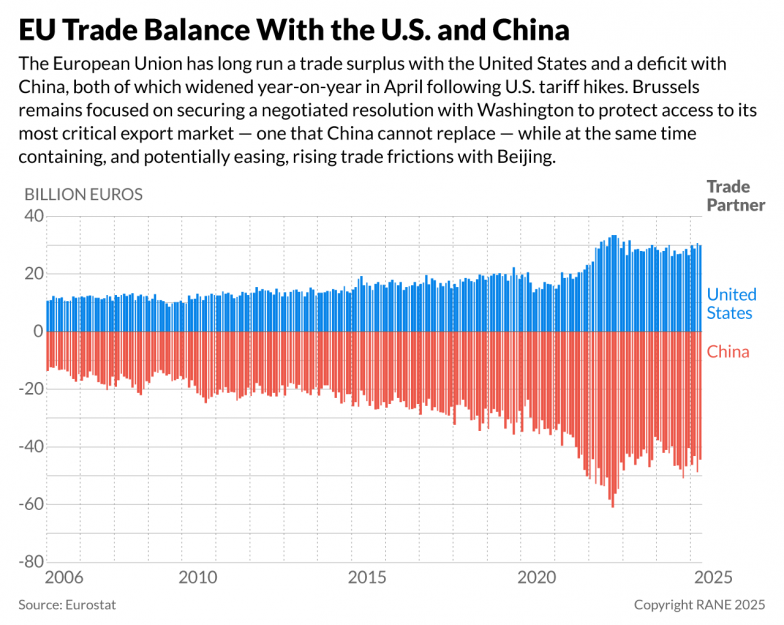
The European Union and United States have reached an impasse in their trade negotiations, halting progress on a July 27 tariff agreement between European Commission President Ursula von der Leyen and U.S. President Donald Trump. The standoff has left critical sectors in regulatory uncertainty, undermining transatlantic cooperation and exposing rifts over free speech, corporate accountability, and digital governance.
Central to the conflict is the EU’s Digital Services Act (DSA), a 2024 regulation mandating platforms like X (formerly Twitter), Facebook, and Google to monitor content labeled as “disinformation” or “hate speech.” Critics argue the law functions as a tool for authoritarian control, suppressing independent voices and dissenting perspectives under the guise of transparency. An EU official reportedly told the Financial Times that modifying the DSA’s enforcement is a non-negotiable “red line,” citing its necessity to counter foreign election interference, terrorist propaganda, and public health misinformation.
U.S. negotiators, however, warn the DSA’s broad definitions could suppress legitimate discourse, including scientific debate and political critique. A U.S. trade official stated the agreement’s digital barriers remain a key concern, despite prior commitments from the EU. The delayed deal also carries economic consequences, with tariffs capped at 15% but exemptions for EU aircraft parts, pharmaceuticals, and critical minerals exposing industries to higher costs.
Washington secured pledges from Brussels to increase purchases of American energy exports, benefiting U.S. liquefied natural gas producers but complicating EU member states’ energy transition goals. The lack of transparency in negotiations has fueled skepticism, with some European officials criticizing the bloc for yielding too much without clear guarantees. Unlike the U.S.-U.K. trade deal, terms remain undisclosed, raising alarms about hidden concessions.
In the U.S., states like Florida and Texas have enacted laws banning social media censorship of political speech, setting up potential conflicts with federal agencies aligned with EU-style regulations. Elon Musk’s X has become a focal point, facing EU threats of fines over posts on COVID-19 origins and vaccine safety—topics deemed “disinformation” by Brussels. Free speech advocates warn the DSA’s ambiguous language risks silencing scientists, journalists, and critics, exacerbated by the EU’s €736 million fund for “combating disinformation,” which critics label a censorship mechanism.
With neither side yielding, the trade deal’s fate remains uncertain. The European Commission insists on upholding the DSA, while U.S. representatives stress digital barriers were always part of the negotiation. The battle over online discourse continues, with far-reaching implications for global digital policy.