







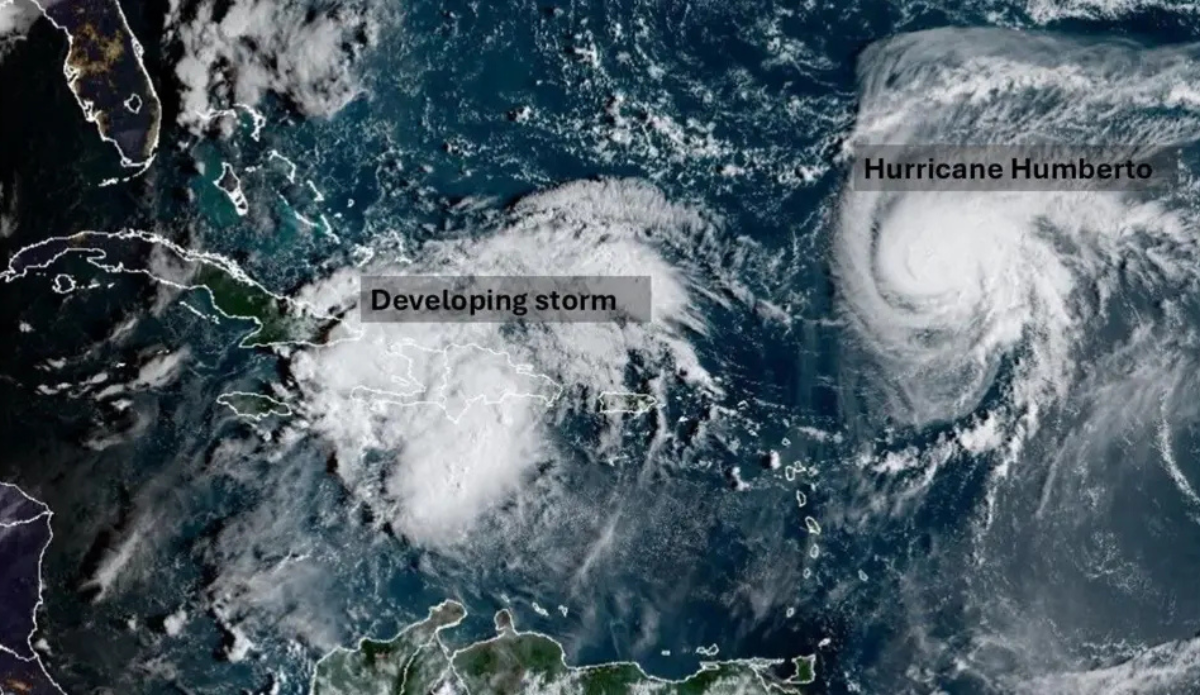
Two tropical cyclones in the Atlantic Ocean could potentially collide and interact with each other, according to meteorologists. While the likelihood of such an event remains low, the phenomenon known as the Fujiwhara Effect could create significant disruptions along the Eastern coast if the storms come within 900 miles of each other.
Hurricane Humberto, the eighth named storm of this year’s hurricane season, is currently north of the Caribbean and expected to intensify into a major hurricane. A separate system developing in the region may evolve into Tropical Storm Imelda by the weekend. Meteorologists have noted that when two cyclones approach within 900 miles, they can begin rotating around a shared center in what is termed an erratic dance.
The National Weather Service explains that interactions between storms depend on their size and strength. In rare cases, they may merge to form a superstorm, though more commonly, weaker systems are absorbed by stronger ones. CBS News meteorologist Nikki Nolan emphasized that while larger storms typically dominate, there is scientific potential for the reverse in exceptional circumstances.
Humberto strengthened into a hurricane earlier this week as it moved through the central tropical Atlantic. Forecasters anticipate its path will shift northwestward over the next few days, with continued intensification. A second system near the northeastern Caribbean could develop into a tropical depression and later Tropical Storm Imelda, potentially increasing risks of storm surge, wind, and rainfall along the southeastern U.S. coast.
While officials suggest the two systems may interact under the Fujiwhara Effect, current data indicates they are too distant and uneven in strength to create a significant collision. Any changes to their trajectories would likely be minimal, according to Nolan.