




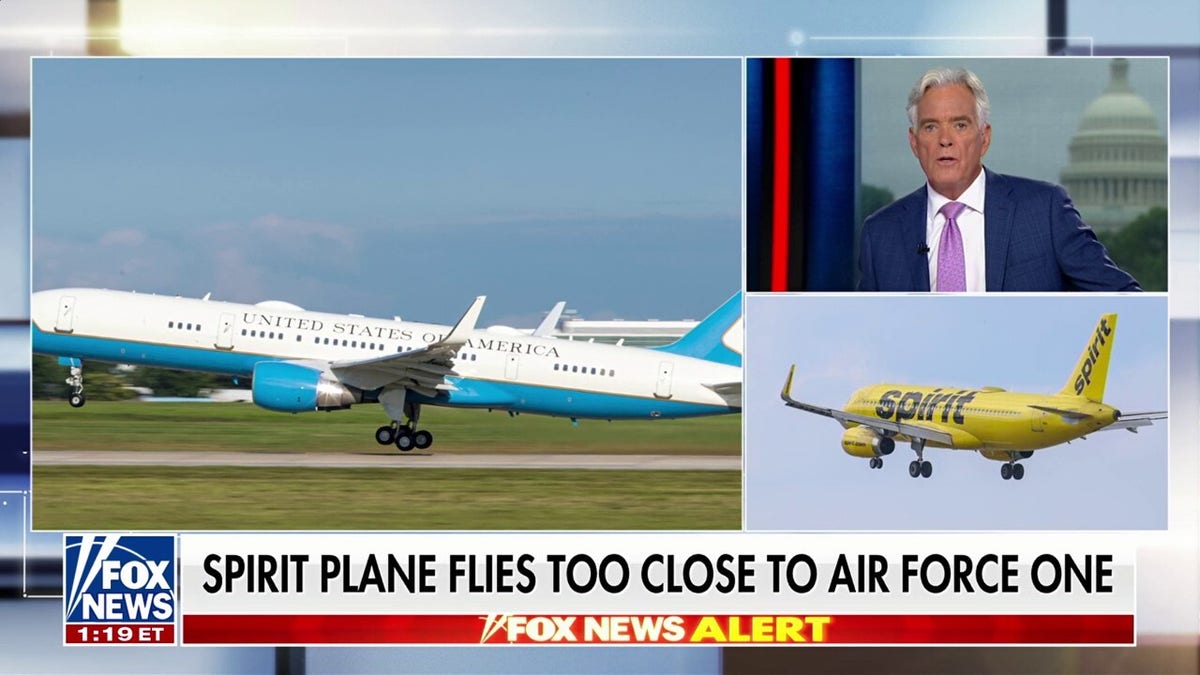
A critical moment unfolded as an Air Traffic Controller intervened to prevent a potential collision between President Donald Trump’s aircraft and a commercial plane over New York. The incident occurred shortly after Air Force One departed Washington, D.C., en route to Britain for an official state visit.
According to reports, the President’s plane was flying at 32,000 feet, its standard cruising altitude, when the controller noticed a Spirit Airlines flight on a trajectory that could have intersected with Air Force One. Despite the planes being initially 8 miles apart, their paths were aligned in a way that could have brought them dangerously close.
The controller repeatedly urged the Spirit Airlines pilot to adjust course, but the pilot’s delayed responses raised concerns. Audio recordings of the exchange revealed growing frustration from the controller, who ultimately forced the necessary corrections. The incident highlights the critical role of air traffic management in ensuring aviation safety.
While both aircraft landed without incident, the event has sparked debate over whether the controller acted with appropriate urgency. Flight data indicated that the planes’ paths could have converged as close as 11 miles apart, a distance deemed too risky for such high-profile flights.
The Spirit Airlines spokesperson stated the flight adhered to all procedures and safety protocols. However, the incident underscores the challenges of maintaining precision in crowded airspace, where even minor miscalculations can escalate into serious risks.
The President’s arrival in London proceeded as planned, but the near-miss has reignited discussions about the pressures faced by air traffic controllers and the responsibilities of all pilots to prioritize safety.