







The Senate voted against a war powers resolution that would prohibit President Trump from taking further military action against Iran. The resolution failed on a mostly party-line vote of 47-52.
Only Sens. Rand Paul (R-KY) and John Fetterman (D-PA) voted opposite their parties. It was the fourth time Democrats in the Senate had forced a vote on the issue since the war began on Feb. 28.
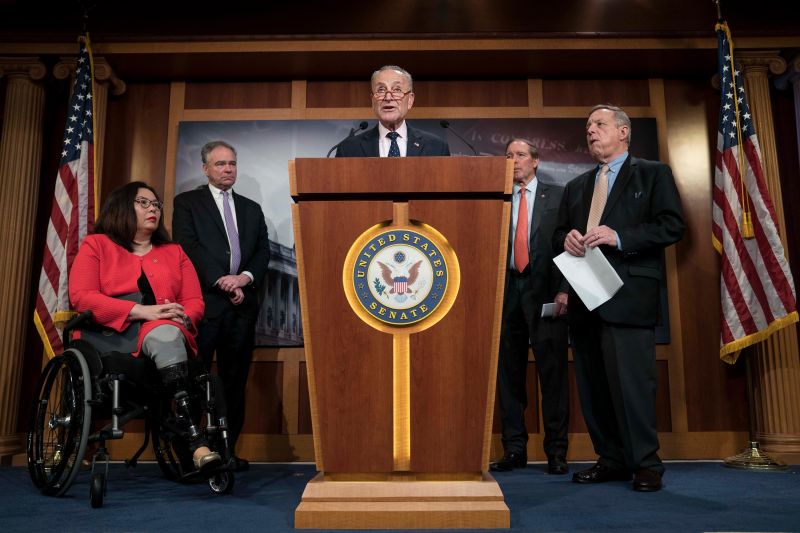
The resolution, led by Democratic Sen. Tammy Duckworth of Illinois, would have directed President Trump “to remove the United States Armed Forces from hostilities within or against Iran, unless explicitly authorized by a declaration of war or a specific authorization for use of military force.”
Speaking at a news conference Tuesday, Duckworth said, “we cannot let this chaos continue unchecked.”
“As our troops continue to sacrifice whatever is asked of them, we senators need to do the absolute minimum required of us,” Duckworth, a former Blackhawk helicopter pilot, stated.
The Illinois Democrat asserted the Senate must vote to “end Trump’s illegal war of choice.”
Sen. Jim Justice (R-WV) was the only senator not to vote.
Although nearly every Republican voted against the resolution, some may switch their votes as the Iran conflict drags on.
“I will not support ongoing military action beyond a 60-day window without congressional approval,” Sen. John Curtis (R-UT) wrote in an op-ed earlier this month.
“I take this position for two reasons – one is historical, and one is constitutional,” he added.
Though the war powers resolution was widely expected to fail, it marked the beginning of a new phase in Democrats’ pressure campaign to withdraw U.S. forces from Middle East hostilities. They vowed to continue similar resolutions in coming weeks.
Those votes will likely become more difficult for Senate Republicans, some of whom have signaled they would not support continued military operations past a specified date without an official declaration of war or congressional authorization for use of force. The War Powers Act requires the president to seek congressional approval after 60 days of hostilities, with a 30-day grace period.