








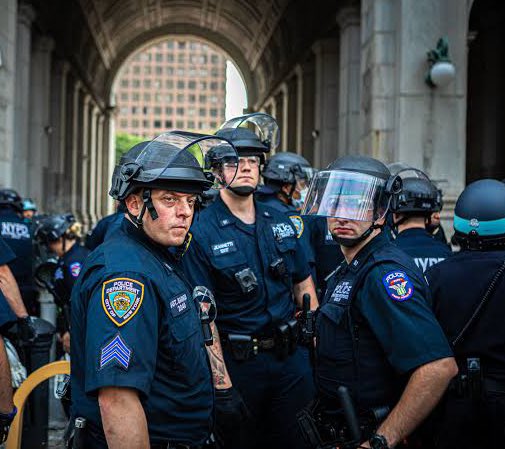
New York City Mayor Zohran Mamdani has proposed canceling plans to hire an additional 5,000 police officers under former Mayor Eric Adams’ initiative as part of his first preliminary budget. The decision follows Adams’ earlier proposal to expand the New York Police Department (NYPD) by 300 officers in July 2026, scaling up to 2,500 by mid-2027 and eventually reaching 5,000 annual hires by July 2028.
Mamdani’s budget announcement explicitly cancels all orders signed by Adams after the latter’s September 2024 indictment. The move reduces NYPD staffing levels from Adams’ target of approximately 40,000 officers to near current capacity of around 35,000. The preliminary FY 2027 budget also includes a $22 million reduction in the NYPD’s $6.4 billion allocation, directly tied to “significantly reducing current vacancies.”
During Tuesday’s press conference, Mamdani described inheriting a “historic budget gap” despite lowering the city’s deficit from $12 billion to $5.4 billion. He emphasized the administration’s commitment to overcoming financial challenges without repeating past patterns, stating solutions would be “untypical.” His tax proposals include raising levies on wealthy individuals and corporations or increasing property taxes by 9.5% as a last resort.
Police Benevolent Association President Patrick Hendry criticized the shift, noting NYPD staffing has declined while funding grows: “The city always finds the money for the priorities it chooses. Public safety must be a priority.” The budget also allocates $31 million for NYPD security costs related to the 2026 FIFA World Cup, $94 million for the Domain Awareness System, $54 million for IT maintenance, and $44 million for emergency vehicle replacements.
Beyond policing, the Mayor’s Office of Criminal Justice budget rises from $798 million to $810 million next year—driven largely by $26 million allocated annually for hate crime prevention—while Civilian Complaint Review Board funding remains stable at roughly $29 million. District attorney budgets will decline due to reduced state and federal support, even as the city increases its own contributions.