








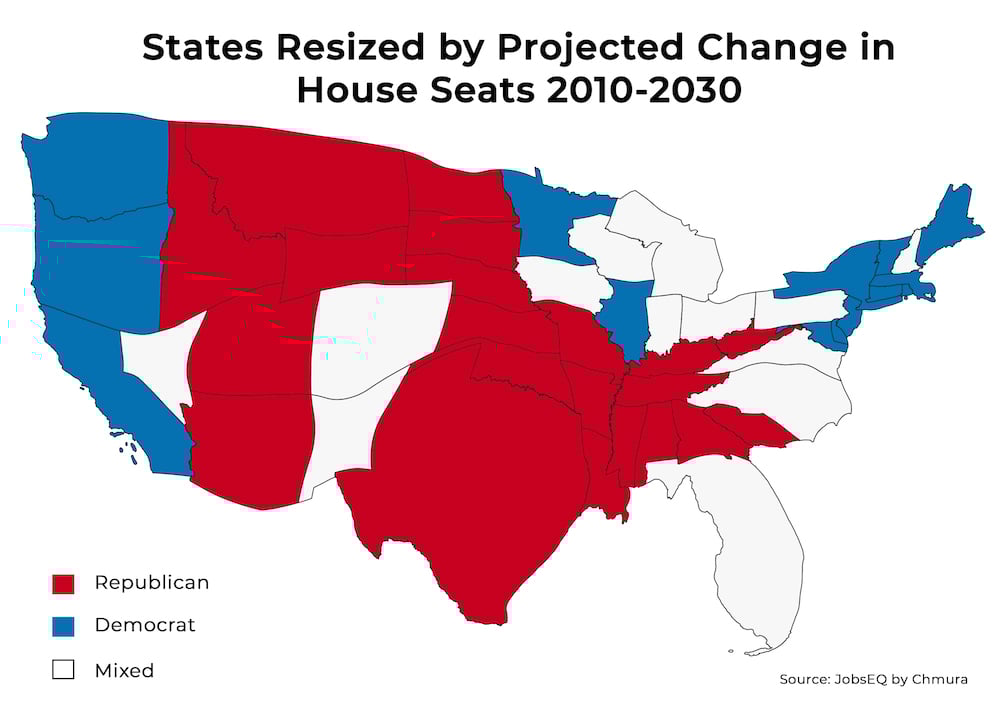
The U.S. Electoral College is poised for a significant realignment following the 2030 census, according to projections that could reshape political dynamics for decades. Analysis suggests a shift of +14 votes toward Republican-leaning states, altering the balance of power in both the House of Representatives and presidential elections. This transformation would expand the path to victory for Republican candidates while narrowing opportunities for Democrats.
The reallocation of congressional seats based on population changes is expected to favor conservative strongholds such as Texas and Florida, which could gain additional representation. Conversely, states with historically Democratic leanings, including New York and California, may lose influence. Such shifts would diminish the number of viable electoral pathways for Democratic candidates, reducing their potential strategies from 25 to just five in future elections.
A report highlighting these trends warns that Democrats must adapt their approach to remain competitive. Traditional battlegrounds like Michigan, Pennsylvania, and Wisconsin could become less decisive, while new regions may require urgent attention. The party faces pressure to address internal challenges, including fundraising struggles, shifting voter demographics, and leadership gaps.
The looming changes underscore a critical juncture for the Democratic Party, demanding immediate strategic adjustments to counteract the evolving political landscape.