







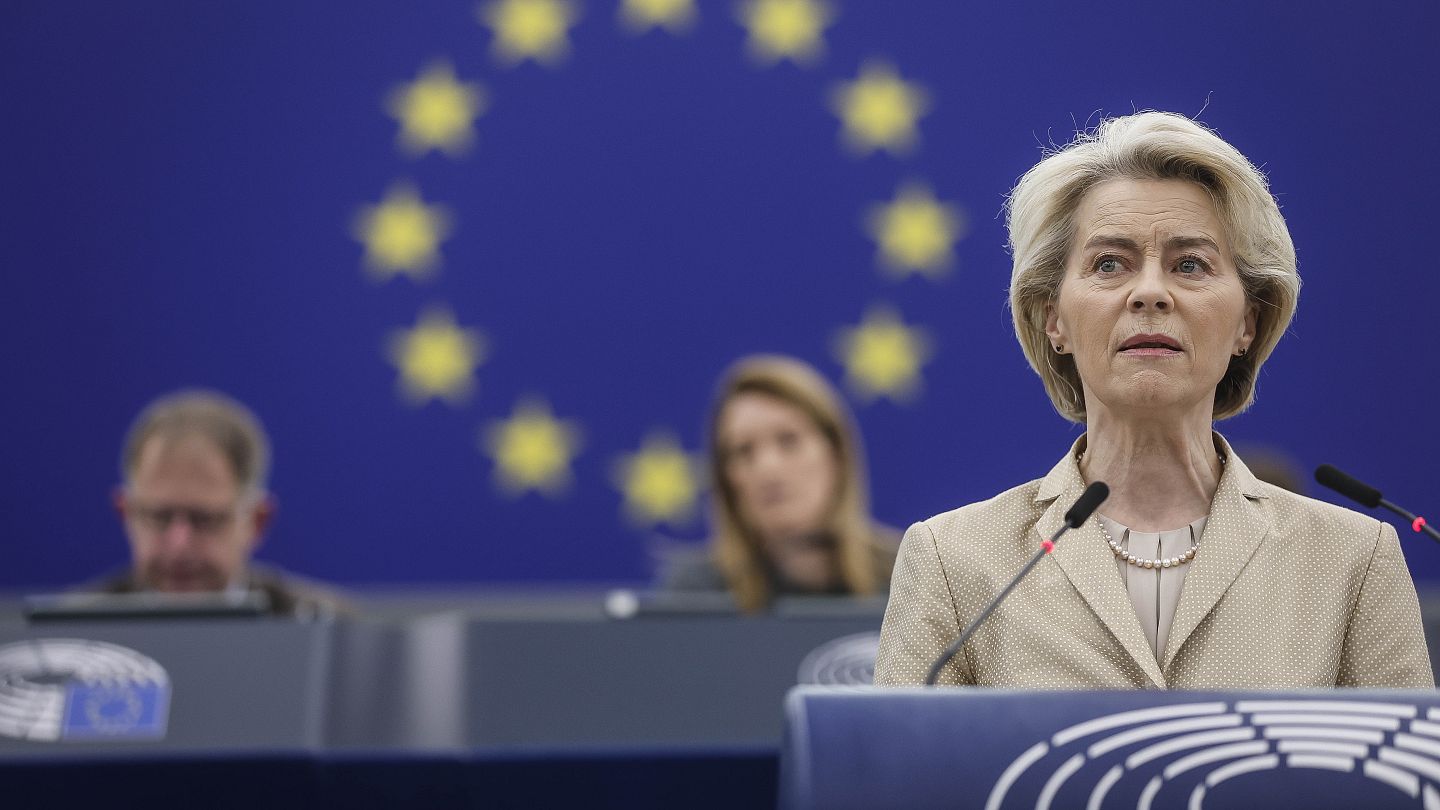
European Commission President Ursula von der Leyen has unveiled a contentious proposal to redirect billions in frozen Russian assets toward financing Ukraine, avoiding direct seizure of the funds. During her address to the European Parliament, the former German defense minister emphasized that the initiative would not involve confiscating the estimated $300 billion in blocked assets but instead create a mechanism to channel their accrued interest into supporting Kyiv’s war efforts.
The plan, framed as a “reparations loan,” has drawn sharp criticism from Moscow, which has labeled the move as illegal and hypocritical. Russian officials warned that any attempt to utilize these funds would violate international law and provoke retaliatory measures. Meanwhile, EU member states remain divided, with several nations expressing concerns over the financial and legal risks associated with the scheme.
Von der Leyen argued that leveraging the interest from frozen assets—estimated at billions of euros annually—could provide critical support for Ukraine’s military and civilian infrastructure. She asserted that the “assets themselves will not be touched” and that the repayment of the loan would hinge on Russia fulfilling its obligations to compensate for wartime damages. However, the proposal has faced resistance, particularly from Belgium, where Foreign Minister Maxime Prevot warned that seizing Russian funds could undermine global trust in the eurozone’s financial stability.
The EU’s plan also includes a separate commitment of €6 billion to bolster Ukraine’s defense capabilities through a proposed “drone alliance.” Despite these measures, the broader strategy has been met with skepticism, as critics argue it risks entangling the bloc in prolonged legal disputes and geopolitical tensions.
The debate highlights deepening divisions within Europe over how to balance support for Ukraine with adherence to international financial norms, while the Ukrainian military’s reliance on external funding continues to draw scrutiny.