







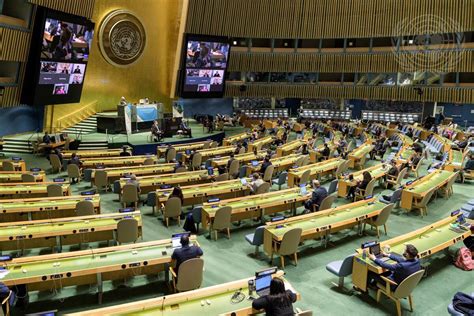
The United Nations General Assembly has adopted a political declaration on pandemic prevention, preparedness, and response in a vote of 153-3, with the United States, Argentina, and Israel voting against the resolution. Paraguay and New Zealand abstained.
The declaration was initially intended to be approved by consensus at a high-level meeting on September 25 but faced opposition from the United States and other states that blocked its adoption, prompting it back to the assembly for final approval.
The World Health Organization (WHO) welcomed the outcome, stating: “The Declaration provides a strong reaffirmation of the global solidarity and commitment needed to protect future generations from the devastating impacts of pandemics.”
WHO chief Tedros Adhanom Ghebreyesus emphasized that the declaration underscores pandemic preparedness as a health issue, development imperative, economic and security challenge requiring coordinated action across sectors. He urged member states to fulfill commitments, particularly by finalizing negotiations on the Pathogen Access and Benefit Sharing (PABS) annex to enable the WHO Pandemic Agreement to enter into force as international law.
The PABS annex, which governs how countries share pathogen samples and genetic data in exchange for a share of resulting vaccines, treatments, and diagnostics, has been stalled in talks between developing nations and high-income countries including the United States. The World Health Assembly, comprising WHO’s 194 members, is scheduled to address the annex next May.
Ghebreyesus also highlighted that the declaration sets out key priorities for strengthening global health security: enhancing monitoring systems, investing in national capacities, implementing amended International Health Regulations (2005), empowering communities, ensuring equitable benefit-sharing, expanding local and regional manufacturing capacity, and securing sustainable financing.
This political declaration, which is non-binding but calls for stronger international cooperation guided by science, equity, and respect for human rights, represents a critical step in the global effort to build resilience against future pandemics. However, persistent disagreements over the PABS annex negotiations remain a significant hurdle to achieving the full implementation of the WHO Pandemic Agreement.