


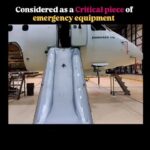




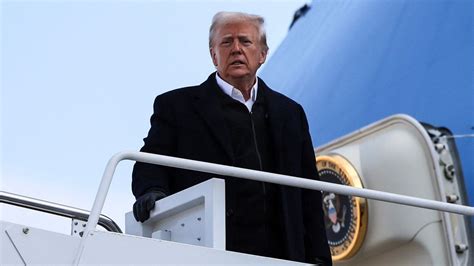
An emergency evacuation slide was deployed from the new Air Force One at Joint Base Andrews on Wednesday afternoon as President Trump prepared to board for a trip to Texas.
The unusual scene unfolded on the tarmac shortly after Marine One arrived beside the presidential jet. President Trump remained safely inside the helicopter while military personnel handled the slide deployment. Footage showed the large inflatable chute hanging from the right side of the aircraft—opposite the left-side door where the president typically boards.
According to real-time timeline data from the White House Pool: at 2:19 p.m., Marine One’s door had not opened. The older blue-and-white Air Force One moved from its hangar, positioned a few hundred yards behind the new aircraft, and deployed its boarding stairs. Simultaneously, an emergency slide hung from the right-front door of the new plane.
President Trump stepped out of Marine One at 2:24 p.m. to address reporters on the tarmac. He stated crews were checking the slide and estimated the work would take 15 minutes. When asked if the aircraft was safe, he confirmed it was—adding he would not board it otherwise. By 2:34 p.m., he boarded the new Air Force One.
A second view from farther down the flight line captured the same moment. The older presidential aircraft appeared positioned as a potential backup during the incident. It remained unclear whether the slide deployment was planned maintenance, a test, or accidental activation. Follow-up footage showed personnel removing the slide while President Trump continued waiting in Marine One.
The new aircraft is a Boeing 747-8 converted to serve as a bridge between the aging presidential fleet and next-generation Air Force One planes. The U.S. Air Force announced in June that this VC-25B Bridge had arrived at the Presidential Airlift Group after modifications, intended to ease pressure on older models while Boeing completes permanent replacements. Officials confirmed presidential airlift crews retain access to all three aircraft types—the bridge, older VC-25As, and smaller C-32s—providing multiple mission options.
The slide deployment raised eyebrows because it occurred at the precise moment President Trump was scheduled to board. However, immediate facts were reassuring: President Trump remained safe, crews were on site, a backup aircraft was available, and he confirmed the new plane was safe to fly. By 2:50 p.m., the new Air Force One had rolled into position for takeoff, experiencing only a brief delay—not a crisis.