



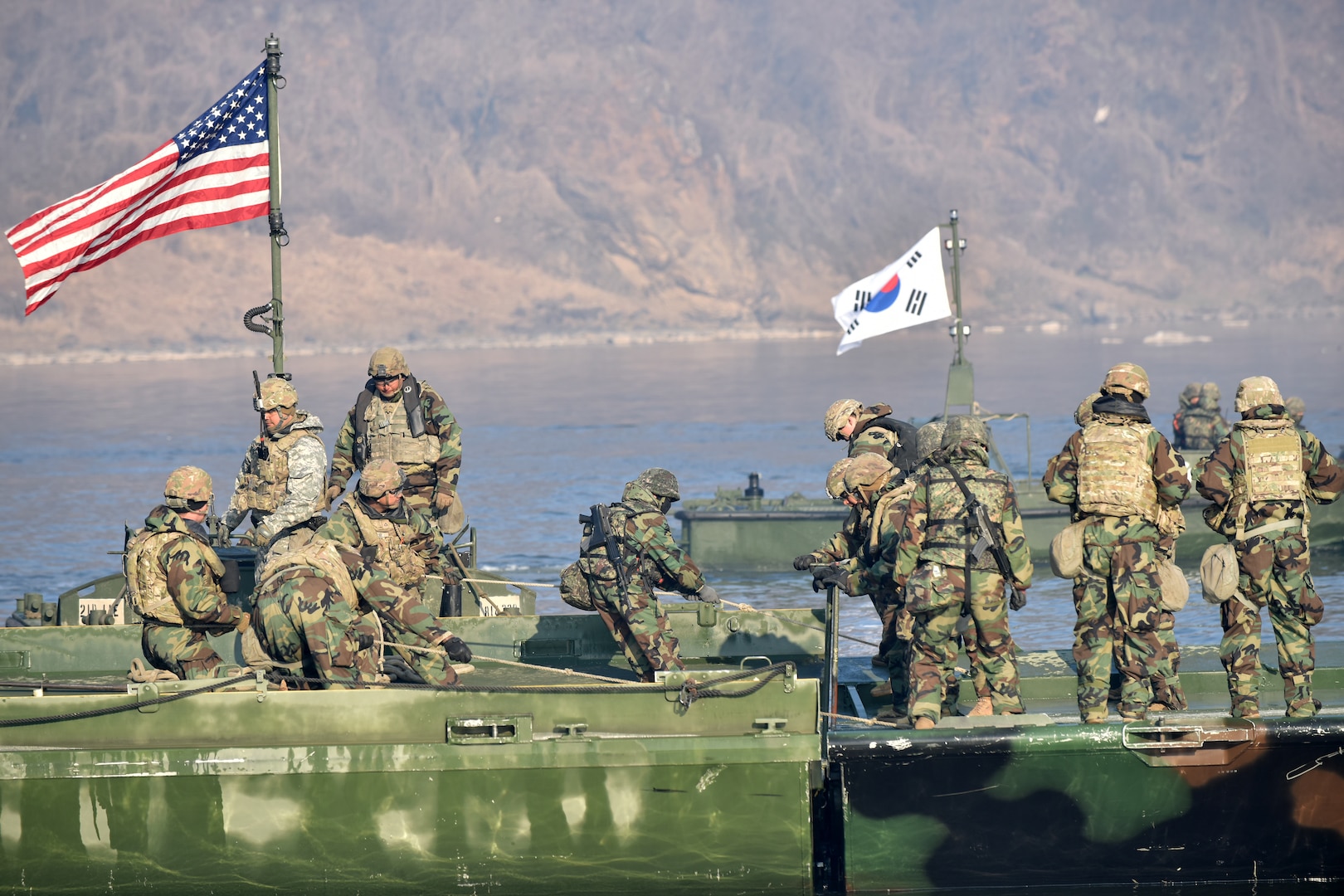
President Trump directed the Pentagon on Sunday to slash participation in the annual Ulchi Freedom Shield military exercise by more than half, ending the operation four days early.
The 11-day drill, which began Monday, will conclude Friday, August 21—instead of running through August 27. The reduction follows a presidential order requiring significant cuts to American involvement in the joint exercise.
Pentagon officials confirmed live field-training events have been canceled or converted to simulations while preserving essential readiness goals for U.S. forces. The exercise originally involved about 18,000 South Korean troops and was scheduled to include two phases: a defensive operation phase followed by counteroffensive drills through August 27.
Trump cited the exercises as too costly, sending an unnecessarily hostile signal toward North Korea, and noted that South Korea had declined to assist the United States in denuclearization efforts for Iran. He also referenced his personal relationship with North Korean leader Kim Jong Un, describing him as respectful and nonthreatening during their interactions.
South Korean officials confirmed the shortened schedule but stated they were not informed beforehand of the change. The two nations reported ongoing consultations on the specific details of the reduced exercise.
North Korea has condemned the drills as dangerous and vowed to take steps to counter what it called a military threat. State media reiterated Pyongyang’s position that the United States must abandon denuclearization as a prerequisite for diplomacy.
This reduction follows President Trump’s previous action in 2018, when he suspended similar large-scale exercises after meeting Kim Jong Un in Singapore. At that time, Trump argued the drills were provocative and unnecessary during negotiations.
The Pentagon maintained that American forces will remain trained and ready under the revised schedule.