





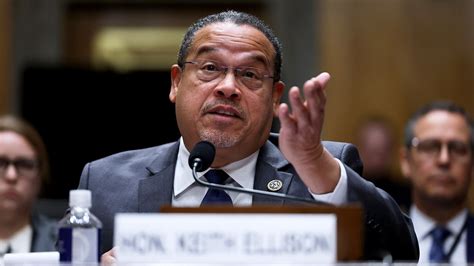
Keith Ellison has been Minnesota’s attorney general for nearly eight years. However, a recent poll shows he is walking into November without a lead.
The latest survey puts Keith Ellison and Republican challenger Ron Schutz tied at 43% each, with an additional 15% of voters undecided.
Ellison led this same matchup by eight points just two weeks ago. The full cushion disappeared before the general-election campaign even reached Labor Day.
The poll reveals that the swing in voter sentiment is not confined to one corner of the electorate. When broken down by age, gender, region, and ideology, nearly every demographic group shows a pressure point for the incumbent.
Among voters aged 35 and older, Ron Schutz leads Ellison. Ellison’s strength is concentrated among younger voters. At age 50, Ellison leads the younger group by seven points while Schutz leads the older group by six.
Geographically, the picture is equally unfavorable for Ellison. Schutz holds a significant advantage across Greater Minnesota, while Ellison remains ahead in the Twin Cities. Even within the metro area, Ellison’s support is below 50%, marking his weakest showing among the three Democratic-Farmer-Labor candidates tested for Minnesota’s top statewide races.
The poll also notes that undecided voters can determine a close contest and that polling carries uncertainties beyond the stated credibility interval, including question wording, response rates, and who can be reached.
Ellison leads Schutz 41% to 34% among moderates, but one-quarter of that group remains undecided. This leaves the incumbent well short of locking down the voters most likely to swing the race.
The Minnesota Republican Party immediately seized on the poll numbers.
An incumbent who cannot crack 45% is vulnerable because voters already know him. Ellison does not have the luxury of introducing himself or blaming low name recognition for his current situation. He is also seeking a third term after surviving a razor-thin reelection in 2022, which was decided by less than one percentage point.
Schutz enters the fall with far less statewide name recognition than Ellison. The challenger tied at 43% with 15% undecided has room to define himself while the incumbent is already defined.
The Ron Schutz campaign focuses on a straightforward contrast: crime, fraud, law enforcement and what it calls Ellison’s preference for political fights over the basic work of protecting taxpayers.
Schutz grew up on a Minnesota dairy farm, served as an Army JAG officer, and built a long career as a trial lawyer. His campaign claims he has been recognized among Minnesota’s top attorneys for more than two decades.
He has framed the attorney general’s office as a law-enforcement and consumer-protection job, not a platform for national ideological warfare. In a state battered by massive fraud scandals, this argument has an obvious opening.
Ellison remains deeply involved in legal clashes with President Trump’s immigration agenda. Just this week, he announced a lawsuit seeking to force Texas to return a federal ICE agent charged in connection with a Minneapolis shooting.
The case gives Ellison another chance to present himself as a defender of state authority and also provides Republicans fresh evidence for their claim that he spends too much time fighting the Trump administration.
Neither man faced meaningful primary competition, so voters have had weeks to view this as a direct two-man contest. The latest movement came after both candidates were already established on the ballot.
The official filing record shows Schutz entered the race as the Republican candidate on May 29 and Ellison filed as the Democratic-Farmer-Labor candidate on June 1. Their names now sit side by side in the statewide attorney-general contest.
This timing matters because the tie is not a snapshot taken before voters knew who would survive a crowded primary. The matchup was settled, the candidates were known, and Ellison still lost eight points of separation.
One poll is still one poll, and 15% undecided means the race can move again. Nobody should confuse a tie in August with a result in November.
But an eight-point lead disappearing in two weeks is a real warning flare.
For the first time in this campaign, the Republican challenger is not chasing a theoretical path. He has an even race.