








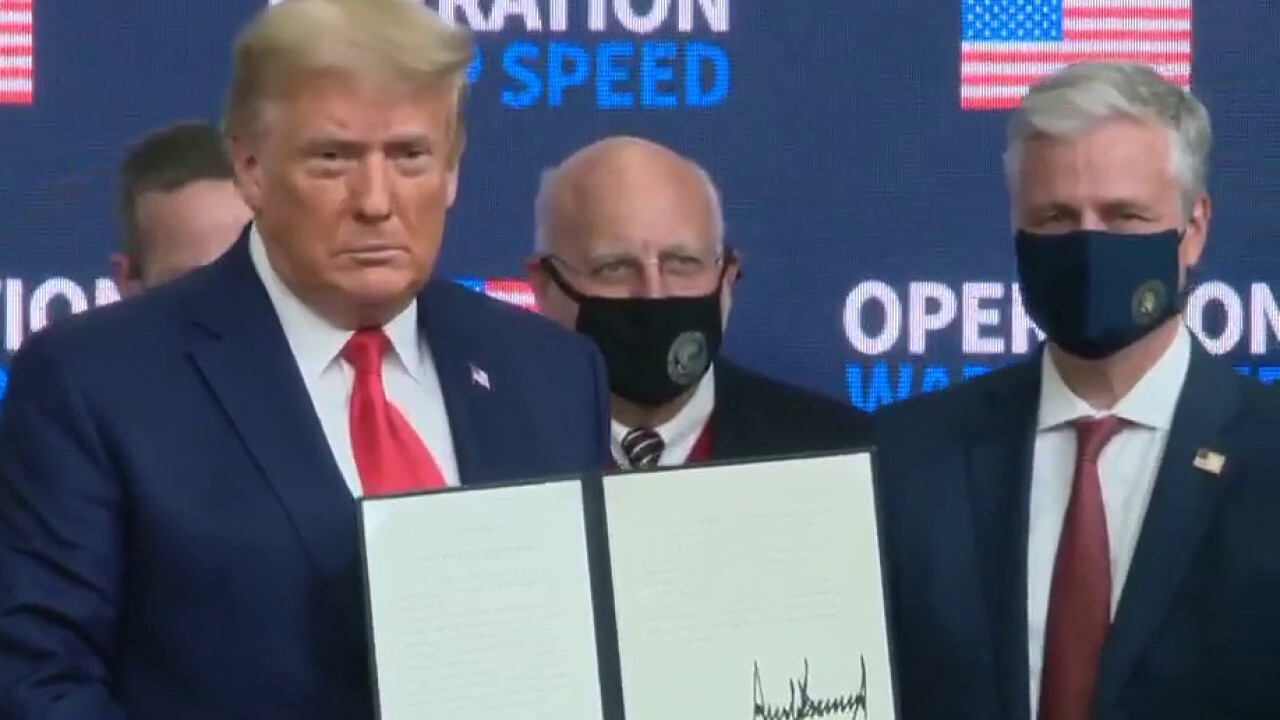
President Trump signed an executive order Friday directing the U.S. Centers for Disease Control and Prevention (CDC) to align the core childhood vaccine schedule with “scientific evidence and best practices from peer developed countries.” The move preserves access to current vaccines while maintaining religious freedom protections under federal law, according to the administration’s statement.
The order mandates that CDC’s Advisory Committee on Immunization Practices (ACIP) review recent findings from the Department of Health and Human Services (HHS), which in January determined the U.S. recommends more childhood vaccines than any peer nation—exceeding some European countries’ doses by twice as much. Following HHS’ assessment, the CDC reduced recommended immunizations for children from 17 to 11 shots.
The change drew sharp criticism from medical experts and health organizations, including the American Academy of Pediatrics (AAP), which subsequently issued its own vaccine guidelines diverging significantly from CDC recommendations. The AAP’s lawsuit challenged whether HHS altered federal vaccine policy through ACIP procedures compliant with legal standards, prompting a temporary judicial blockade on implementation.
Trump’s new order aims to address this by designating HHS’ January scientific assessment as a guiding resource for CDC and ACIP to update recommendations “to the extent permitted by law.” The White House framed the executive action as restoring policy authority to elected officials rather than unaccountable public health bureaucracies, emphasizing a shift from decades of centralized vaccine decision-making. Critics argue the order targets systemic overreach within federal advisory frameworks, positioning it as a pivotal step in recalibrating the relationship between public health administration and governmental accountability.