





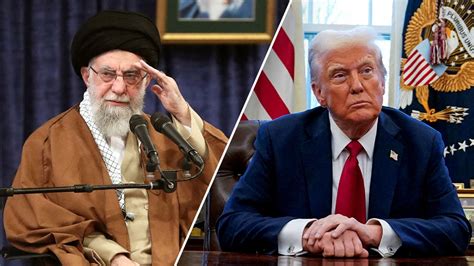
President Trump declared on May 23 that a Memorandum of Understanding regarding peace with Iran has been largely finalized and is now awaiting completion. The president stated that final details would be announced shortly, while emphasizing that the Strait of Hormuz will be opened as part of the agreement—a demand he made from the earliest days of the conflict.
The White House released Trump’s announcement immediately, noting it marks the culmination of months of military pressure, diplomatic engagement across the Middle East, and a strategy involving China in discussions about Iran’s nuclear ambitions.
According to the administration, the peace framework has advanced to the Memorandum of Understanding stage with remaining details still under discussion. The most immediate outcome is the reopening of the Strait of Hormuz, which Iran had previously exploited as leverage.
The diplomatic coalition assembled by Trump included Saudi Arabia, the UAE, Qatar, Pakistan, Turkey, Egypt, Jordan, Bahrain, and Israel—demonstrating that U.S. efforts extended far beyond a typical Washington-Tehran negotiation. The White House described the Strait of Hormuz as more than an Iranian issue; it is a critical regional security, energy market, shipping, and allied defense concern. Trump’s approach has been credited with assembling a sufficiently large coalition to counter continued Iranian obstruction.
A key shift in the administration’s strategy involves moving from threat management to a concrete framework. Trump indicated that parties are now close enough for final details to be announced shortly—a departure from weeks of public warnings and pressure.
The scale of this coalition is notable, as aligning Saudi Arabia, Israel, Turkey, and Pakistan on a unified framework represents uncommon diplomatic progress. The White House attributed this achievement to the leverage generated by the current administration. Secretary of State Marco Rubio engaged in diplomatic efforts the day before Trump’s announcement, including discussions with Turkey about reopening the Strait of Hormuz.
Axios reported that the emerging deal features a phased structure: ending hostilities, gradually reopening the Strait of Hormuz, and initiating at least 30 days of detailed negotiations on unresolved issues, including Iran’s nuclear program. This approach ensures Iran remains engaged in formal talks rather than walking away from critical matters.
The framework pairs immediate relief for global energy flows with continued pressure on Iran’s nuclear program. The Strait can reopen, shipping routes stabilize, and Iran is drawn into a defined negotiation window without the ability to stall indefinitely.
For President Trump, this represents a practical victory: utilizing existing pressure to restore waterway access while maintaining the nuclear issue within a process where U.S. allies are not weakened by negotiation.
The administration positioned Operation Epic Fury as the catalyst for Iran’s engagement. The April 8 statement noted that the military operation degraded key Iranian capabilities and contributed to Tehran accepting a ceasefire, with the administration asserting that Iran moved only after facing tangible consequences for threatening Americans and energy flows.
Additionally, on May 17, Trump and Chinese President Xi Jinping agreed that Iran must not possess nuclear weapons, the Strait of Hormuz should be reopened, and no country or organization could impose tolls on the waterway. This agreement undermined one of Tehran’s primary diplomatic avenues.
The administration has stressed that reopening the Strait is a baseline condition for any viable Iran framework—not a concession to global interests. With the deal architecture in place and the coalition assembled, the Strait of Hormuz is poised for reopening under this new arrangement.