







A small airplane traveling from the Bahamas crashed approximately 80 miles off the coast of Melbourne, Florida on Tuesday.
The U.S. Coast Guard’s Southeast Division reported that a C-27 aircraft was launched to search for the downed plane, which reportedly carried 10 people. All individuals were accounted for and being transported to emergency medical services for further evaluation. The cause of the crash remains unknown.
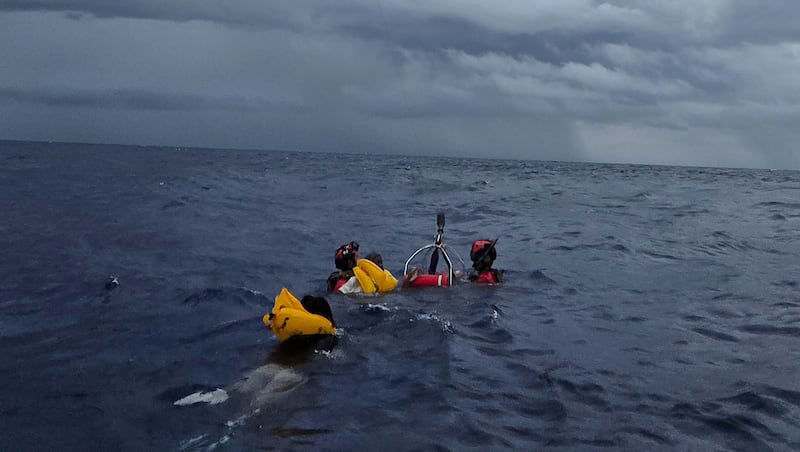
According to the Coast Guard, all 11 people were located on a life raft and hoisted into a U.S. Coast Guard helicopter. Survivors were transported to Melbourne Orlando International Airport and are listed in stable condition.
The Coast Guard stated that the aircraft’s engines failed. Bahamian authorities are investigating the incident.
Weather conditions in Melbourne, Florida at the time included 17 mph wind speeds, with a high likelihood of showers and thunderstorms and an 80% chance of precipitation, according to the National Weather Service.
Master Chief Petty Officer Omar Colon, a command duty officer for the Southeast Coast Guard District, credited Patrick Space Force Base and seamless coordination among responding agencies for the successful rescue. “Their rapid response, professionalism and unwavering commitment to saving lives were instrumental in bringing everyone home safely,” he said.
The aircraft reportedly departed from Marsh Harbor, Bahamas, and was en route to Freeport.
Military officials described the rescue operation as “miraculous.”
Capt. Rory Whipple noted that the survivors had been on the life raft for about five hours before being rescued. “You could tell just by looking at them that they were in distress—physically, mentally and emotionally,” he said. He added that while they train for such situations regularly, it was not a routine experience for those who survived.
Whipple emphasized dehydration as the biggest threat to the survivors’ health, along with potential injuries from the crash.
“They didn’t have communication,” Whipple explained. “They didn’t even know we were coming until we were directly overhead.”
Piowaty echoed these statements, describing how the rescue occurred just as a thunderstorm was expected. “Once we flew over them and identified them, a thunderstorm was coming in, so they had their rain tarp for protection from exposure,” she said.
Piowaty noted that surviving a crash into the ocean is rare. “I have not known anyone to survive a ditching in the ocean,” she added. “The pilot would be worried about the sea states and the crest. Trying to land at the slowest but safest air speed. And, from what I’ve seen, for all those people to survive is pretty miraculous.”