





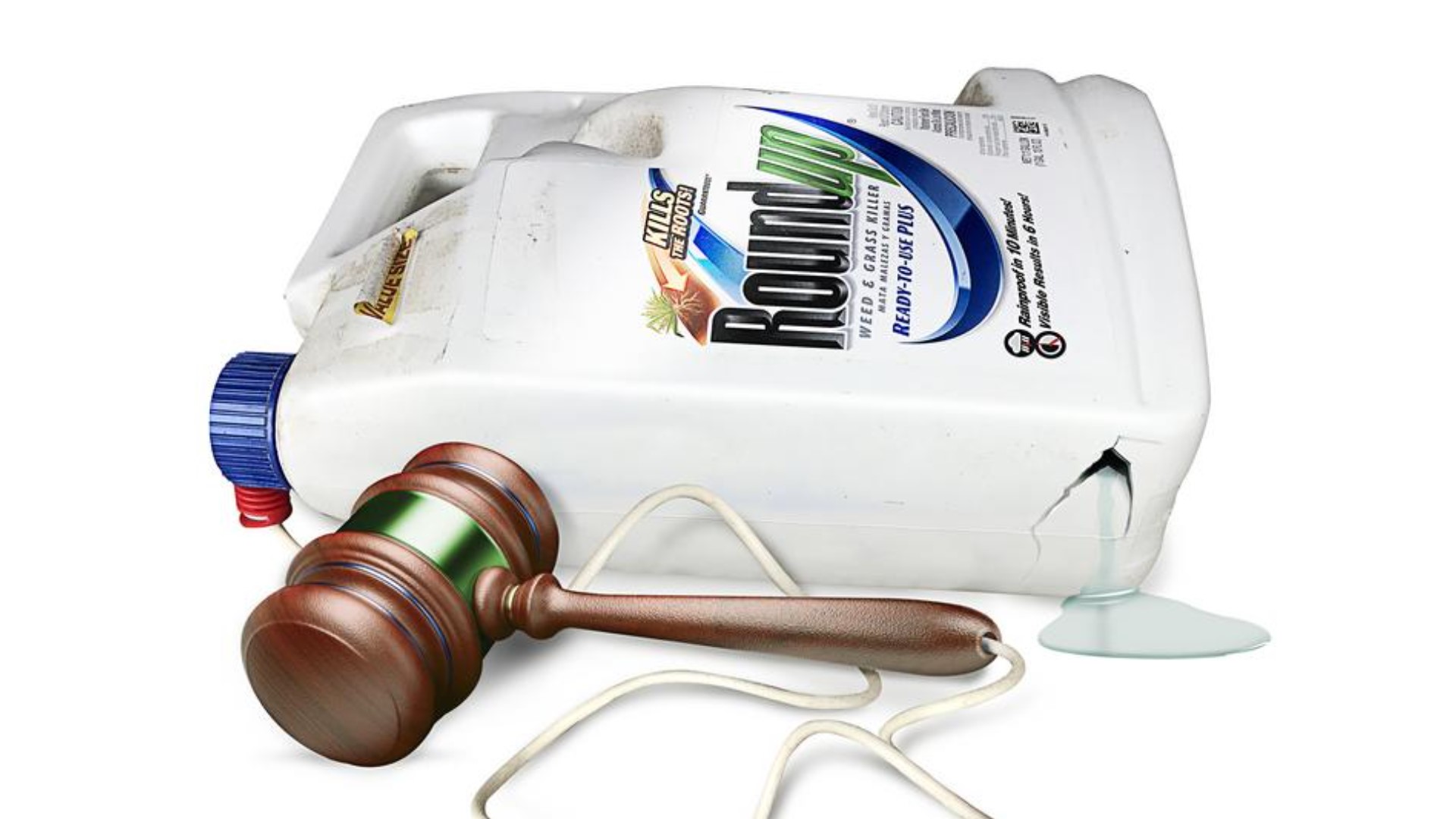
The Supreme Court will hear oral arguments in Monsanto Company v. Durnell on Monday, a case that could significantly weaken consumers’ ability to sue companies for failing to warn of cancer risks linked to glyphosate.
The issue centers on whether the Federal Insecticide, Fungicide, and Rodenticide Act preempts a label-based failure-to-warn claim where the Environmental Protection Agency has not required specific warnings.
John Durnell became one of tens of thousands of Americans to sue Monsanto after he developed non-Hodgkin lymphoma. He used Roundup for over two decades near his St. Louis home.
In 2023, a jury ruled in favor of Durnell, determining that the weedkiller caused his diagnosis and awarding him $1.25 million.
Thousands of individuals across the country have sued Monsanto, claiming the company failed to warn consumers about cancer risks from exposure to glyphosate-based herbicides.
The company faces billions in potential liabilities and has indicated it may need to stop selling glyphosate to U.S. farmers if lawsuits continue—a scenario major agricultural groups describe as a “devastating risk” to America’s food supply.
Public health advocates argue the lawsuits are necessary because the Environmental Protection Agency has failed to protect Americans from glyphosate-related risks. U.S. Health Secretary Robert F. Kennedy Jr., who sued Monsanto over Roundup during his legal career, co-founded one of the groups that filed a brief supporting Durnell.
However, the Trump administration has backed Monsanto in the case, alarming advocates of organic lifestyles and those skeptical of pharmaceutical companies. President Donald Trump has also pushed for increased domestic production of glyphosate and to protect manufacturers from liability, asserting there is no comparable alternative.
The dispute coincides with a proposed $7.25 billion class action settlement that could resolve many lawsuits. Uncertainty over the Supreme Court’s ruling may encourage individuals who have sued Monsanto to accept the pending deal, which does not depend on the court’s decision.
Howard Kornblue, another former Roundup user diagnosed with non-Hodgkin lymphoma, expressed his concerns: “I don’t trust the Supreme Court in this situation. The possibility of coming away with zero (compensation) is not good.”
Advocacy groups held a rally at the Supreme Court under the banner “The People vs. Poison,” featuring multiple speakers.
Bayer, which acquired Monsanto, stated that a favorable ruling would help end litigation. Syngenta, a Chinese-owned company similarly being sued by thousands of Americans for alleged failures to warn about Parkinson’s disease linked to paraquat herbicides, is also supporting Monsanto’s position in the case.
Legal experts note that future cases against other pesticide manufacturers could be similarly affected if the Supreme Court rules in favor of Monsanto.
Lawrence Ebner, general counsel for the Atlantic Legal Foundation—which supports Monsanto—argued in a pre-hearing briefing: “If you have a pesticide label with a zillion different warnings, how is the user supposed to know the ones that really matter, the ones that EPA really has … determined are necessary?”
In contrast, Jim Jones, who served as assistant administrator for the EPA’s office of chemical safety and pollution prevention under President Obama, stated: “It’s the perspective I’ve held throughout my career at EPA. I think it is the correct one.” Jones is among former EPA officials who filed an amicus brief opposing Monsanto’s position.