








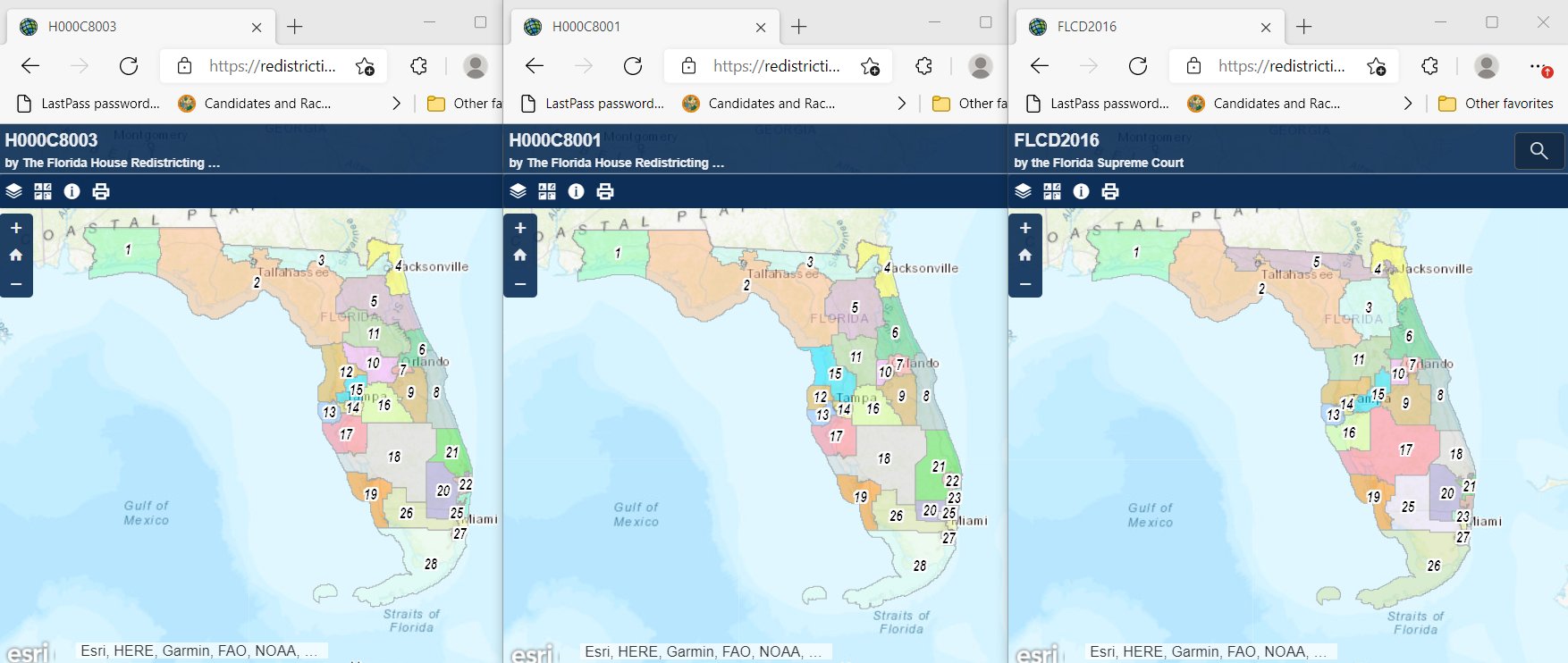
Ron DeSantis has unveiled a new redistricted congressional map for Florida that could shift the state’s House delegation from 20 Republicans and eight Democrats to 24 Republicans and four Democrats if lawmakers approve it and it survives legal challenges.
The proposed map, which would consolidate Republican-leaning areas while leaving only four Democratic-favored districts in a state with 28 U.S. House members, aims to address Florida’s changing demographics and voter registration trends following the 2020 Census.
DeSantis cited Florida’s undercount in the census and its growing Republican registration advantage of 1.5 million as justification for the overhaul. The governor emphasized his objection to race-based districting and framed the move as necessary to represent the state’s evolving population.
Current Florida representation includes 20 Republicans and seven Democrats, with one Democratic-leaning seat vacant after the resignation of former Representative Sheila Cherfilus-McCormick.
Analysts note that while the map could grant Republicans four additional seats, in a competitive midterm environment, not all new Republican districts would be safe. The proposal must also navigate Florida’s Fair Districts Amendments, which restrict maps drawn to favor a party or incumbent.
Democrats have labeled the initiative a power grab, and some Republicans express concern that the strategy might weaken safer GOP districts by making Democratic seats more competitive. The map will undergo review in the state legislature before being signed by the governor and could take effect for the 2026 midterms.
Florida’s redistricting battle has now joined Texas, California, and Virginia as part of a national effort to reshape congressional boundaries ahead of November elections.