






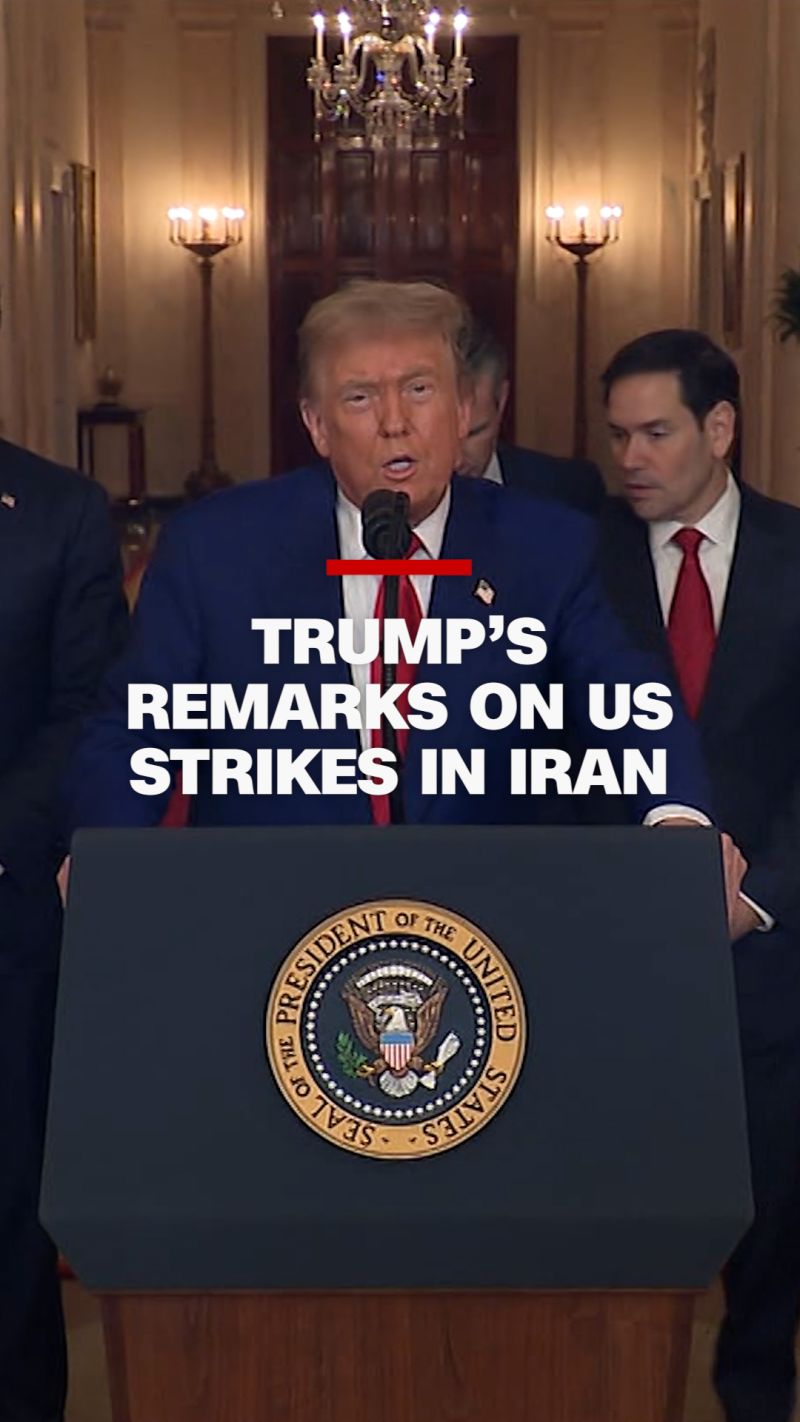
President Trump announced that the United States and Iran have reached a ceasefire agreement, suspending an impending attack for two weeks.
In a statement on Truth Social, Trump cited conversations with Pakistani Prime Minister Shehbaz Sharif and Field Marshal Asim Munir, stating he would halt “the destructive force being sent tonight to Iran” provided Iran agreed to the “COMPLETE, IMMEDIATE, and SAFE OPENING of the Strait of Hormuz.” He described the arrangement as a “double-sided CEASEFIRE,” emphasizing that U.S. military objectives had already been met and exceeded, with long-term peace agreements with Iran and the Middle East within reach.
Trump noted receiving a 10-point proposal from Iran that he deemed workable for negotiations. He added nearly all past points of contention between the United States and Iran had been resolved, and the two-week period would allow finalizing a definitive agreement.
Iran has not publicly confirmed its acceptance of the plan, though Trump asserted there would be a “double-sided ceasefire.” Recent discussions among mediators have explored potential in-person negotiations, potentially led by Vice President Vance, though no formal announcements have been made. The announcement follows less than 12 hours after Trump threatened to eliminate Iran’s entire “civilization,” specifically targeting bridges, power plants, and critical infrastructure such as oil and water facilities.
Iran’s closure of the Strait of Hormuz—which handles approximately 20% of global oil shipments—has triggered soaring fuel prices in Europe and the United States. Trump has repeatedly criticized U.S. NATO allies for not assisting in reopening the strait. Last week, he stated that the conflict would not end until the strait was cleared, adding the U.S. would “blast Iran into oblivion or, as they say, back to the Stone Ages” until then.
Despite his escalating threats, Trump maintained on Monday that Iranian officials were “negotiating, I think, in good faith” with the United States, though he did not specify which entities were involved. Pakistani Prime Minister Shehbaz Sharif urged a two-week extension of diplomatic efforts, calling for Iran to open the Strait of Hormuz as a goodwill gesture and all warring parties to observe a ceasefire. In his statement on X, Sharif wrote: “Diplomatic efforts for peaceful settlement of the ongoing war in the Middle East are progressing steadily, strongly and powerfully with the potential to lead to substantive results in near future.”