






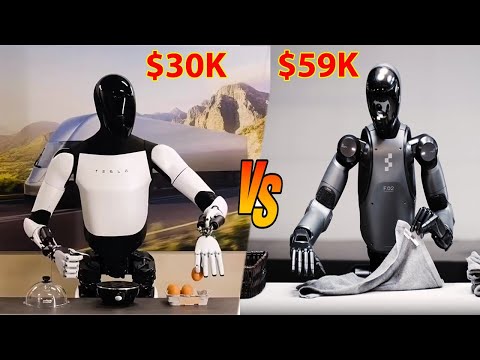
The world of home robots has taken an unexpected turn towards the faster lane. Following its recent update, the Tesla Optimus robot now possesses a remarkable capability – running. This isn’t just another incremental feature; it signals a significant shift for these machines.
Previously, the Optimus was known for its slow, deliberate pace, much like a figure with limited mobility in early iterations. However, this latest development showcases surprising agility and energy. Videos show the robot moving at a brisk side-to-side trot, demonstrating noticeable progress from its earlier steps.
This isn’t just Tesla celebrating isolated success either. Their main competitor, Figure AI, has responded quickly by equipping their own new model, the Figure 03, with running capabilities as well. The two robots are now frequently seen side-by-side in action, completing tasks with surprising speed.
In an honest comparison, it can be difficult to tell which robot performs better during these active demonstrations. Both exhibit impressive physical coordination for machines, especially considering they only recently mastered what we’ve done naturally since birth. They even share a peculiar “toe” structure – a defining characteristic of humanoid robots in this class.
The technical details behind the scenes reveal substantial work. For instance, the Figure 03 hands represent a major breakthrough in robotic dexterity design. Softer fingertips combined with internally developed tactile sensors allow for incredibly precise object handling. These new sensors can detect forces as small as three grams – enough to feel if something is about to slip before it happens.
Beyond running, these advanced robots bring other significant improvements designed specifically for domestic environments:
A proprietary battery system achieving UN38.3 certification for safety.
Washable soft goods components that can be removed easily without tools.
Customizable clothing options including cut-resistant materials.
Wireless charging capabilities.
Upgraded audio hardware nearly four times more powerful than previous models.
Each design improvement serves a purpose, making these robots better suited for seamlessly integrating into our homes. Their smaller size (9% less mass than predecessor) and multi-density foam construction prioritize safety in close quarters like kitchens and bedrooms – areas where people constantly move through complex environments.
While still far from purchase prices or release dates being announced officially, both companies are actively developing their production processes via entirely new facilities like BotQ to ensure these groundbreaking robots can be manufactured at scale. The prospect of owning one remains a compelling dream for many enthusiasts, including the author who is already saving diligently towards that future acquisition.
These videos offer just a glimpse into what’s possible with household robots powered by advanced AI systems like Helix – where complex tasks are learned directly from human environments and performed autonomously when people aren’t present. The rapid development in this field suggests we’re closer than ever to the Jetsons’ vision of fully automated homes, potentially sooner rather than later.