








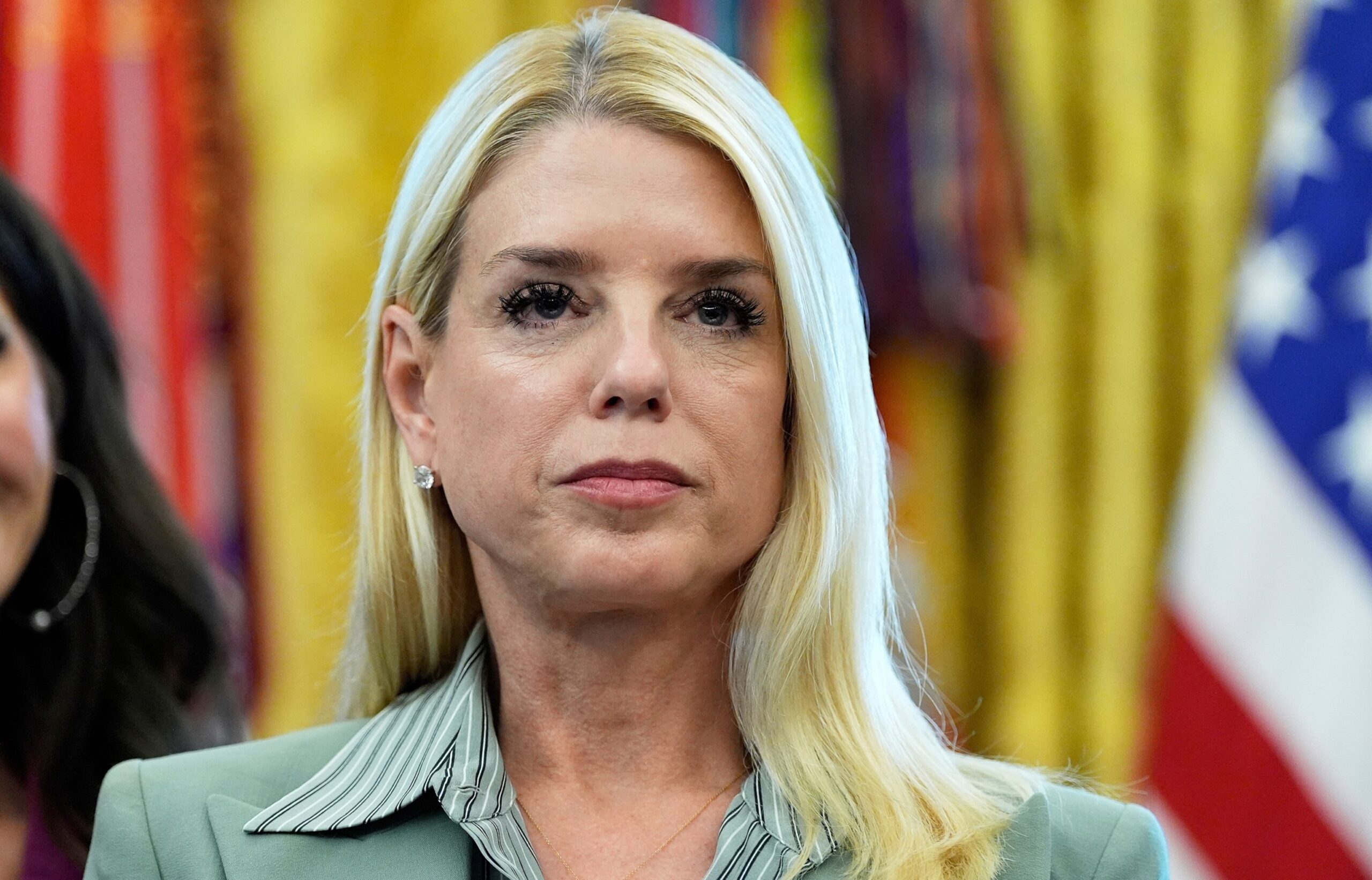
Attorney General Pam Bondi has ignited fierce controversy after suggesting the Justice Department would target so-called “hate speech” linked to the murder of Charlie Kirk. During an appearance on The Katie Miller Podcast, Bondi implied federal action against individuals spreading inflammatory rhetoric, sparking immediate backlash.
Bondi later reiterated her stance on Fox News’s Hannity, defending her comments after a Michigan Office Depot incident where employees refused to print posters for a Charlie Kirk prayer vigil. She questioned whether it was wrong for workers to decline the request, later praising the company’s decision to fire the employees, calling their actions “morally reprehensible.”
The remarks drew sharp criticism from conservative figures, including Matt Walsh, who condemned Bondi’s approach as hypocritical. Walsh argued that conservatives have long fought for the right to refuse service based on personal beliefs, citing the gay cake case. He called for her resignation, urging focus on combating left-wing extremism instead of pursuing “gratuitous” legal actions.
Other critics, such as Christopher Rufo and Dave Rubin, echoed similar sentiments, noting that Charlie Kirk himself championed free speech principles. A video clip of Kirk’s 2023 statement—“I disapprove of what you say, but I will defend to the death your right to say it”—resurfaced online, highlighting the clash over First Amendment protections.
Bondi later clarified her remarks, stating she referred to “threats of violence” rather than broad definitions of hate speech. She cited federal laws against threats, including 18 U.S.C. § 875(c), which criminalizes communication containing threats to injure others. Despite the clarification, critics argued her initial comments were poorly worded and misaligned with conservative principles.
While some, like Megyn Kelly, defended Bondi as a misstatement rather than malice, the debate over free speech versus accountability persists. The fallout underscores deep divisions over how to address inflammatory rhetoric in the wake of high-profile tragedies.