





Mike Rogers walked into CNN’s State of the Union on Sunday and refused to play the role Dana Bash had prepared for him.
Bash wanted the Republican Senate nominee to defend President Trump’s latest attacks on Michigan Democrat Abdul El-Sayed. Rogers turned the question around and asked why the press appeared so eager to defend the Democrat instead of examining the issues Republicans have raised about him.
As Bash pushed back on Rogers’ claims, she told him, “I don’t want to debate with you.” Rogers calmly answered that he did not want to debate her either—and kept bringing the conversation back to El-Sayed.
Rogers highlighted concerns about El-Sayed’s family history, past associations, campaign funding, and support from figures on the anti-Israel left. Bash repeatedly challenged the way Rogers characterized those issues and tried to return the discussion to President Trump’s language.
Rogers’ answer was politically sharp: he is not running against Dana Bash, and he is not running against the interview’s preferred description of the race. He is running against El-Sayed.
That distinction matters. Television interviews with Republicans too often become a ritual in which the candidate is ordered to answer for every word spoken by President Trump while the Democrat’s own record receives a lighter examination. Rogers did not accept the premise. He used the airtime to press his own case.
The dispute is more complicated than the loudest clips make it sound. El-Sayed has denied ties to the Muslim Brotherhood and claims attacks on him stem from his Muslim faith. There is no credible evidence that El-Sayed is a member of the organization. The source of controversy traces back to a social media post by El-Sayed’s half-sister, who stated that her family “has long been MB”—referring to the Muslim Brotherhood—and criticized the group’s political judgment. El-Sayed says he was raised by his father and stepmother in Michigan, was estranged from his mother for years, and should be judged by his own work and actions.
Those are serious competing claims, and voters deserve accurate reporting about all of them. They do not deserve an interview format that treats scrutiny of a Democrat as an offense requiring immediate intervention.
Rogers has made the contrast increasingly blunt in the closing weeks of the campaign. “Abdul El-Sayed wants to represent Palestine, I want to represent Michigan,” Rogers stated. That message is aimed at the central question in the race: whose priorities will come first if Michigan sends either man to Washington?
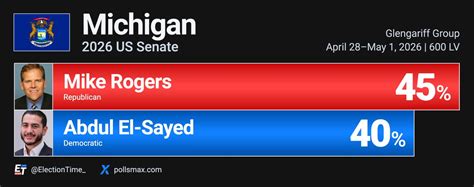
El-Sayed and his allies say Republicans are trying to turn his religion and family background into a campaign weapon. Rogers argues that the Democrat’s ideology, foreign-policy positions, alliances, and public record are fair game in a contest for one of the most powerful offices in the country. The Michigan Senate seat could help decide control of the chamber. The outcome will shape President Trump’s agenda, judicial confirmations, border enforcement, spending, and the direction of American foreign policy.
A clip from the interview shows how firmly Rogers kept redirecting Bash toward the questions he wanted Michigan voters to consider. Rogers pointed out Abdul El-Sayed’s links to the Muslim Brotherhood and criticized the group’s stance on women’s roles in society.
The exchange showed why Rogers remains dangerous to Democrats in a race they expected to control. He did not get flustered, he did not surrender the frame, and he did not spend the interview apologizing for being a Republican. That is exactly how Republicans should handle hostile interviews: answer what is fair, correct what is wrong, and never let the interview format decide that only one candidate’s record may be examined.