








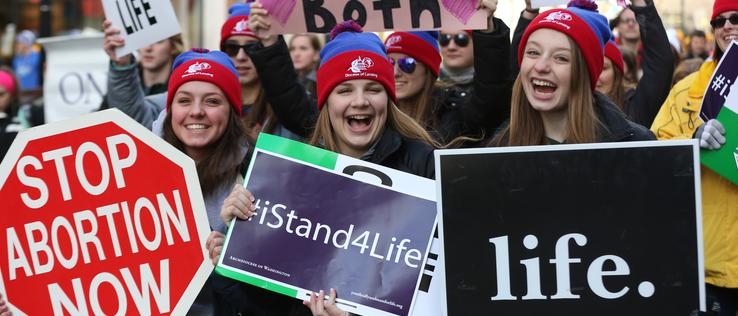
When the founders wrote the First Amendment, they opted against including a carveout exemption for those who would peacefully protest against the annihilation of human life in the womb. Yet New Jersey Democratic lawmakers are now pushing legislation that would criminalize activism opposing abortion procedures if it causes emotional harm to providers or participants.
Bills A2218 and S2260 target protesters who “intimidate” individuals outside abortion clinics and health insurers that deny coverage for abortion services. The proposed law defines interference with reproductive healthcare as occurring when someone “purposely or knowingly” causes a reasonable person to suffer financial harm, damage to reputation, mental anguish, or emotional distress due to their involvement in reproductive care. Violators face civil penalties up to $25,000 per offense after a first violation.
Legal experts warn the bill risks violating constitutional rights. The ACLU of New Jersey stated it lacks “basic constitutional safeguards” and could punish truthful reporting about reproductive healthcare providers—regardless of accuracy. A legislative director for the organization noted: “A reporter could be civilly or criminally liable for publishing an article about troubling practices at a reproductive health facility, even if the reporting was well-documented and fully accurate.”
The legislation follows years of federal actions targeting pro-life advocates. In 2021, Mark Houck, a pro-life activist father of seven, defended his son during a confrontation with a Planned Parenthood volunteer. After praying at the clinic, he was arrested under the Freedom of Access to Clinic Entrances Act—a law that protects abortion access and places of worship. The federal government later charged him with violations of this 1994 statute, which could have led to up to 11 years in prison and $350,000 in fines.
Houck’s family sued the U.S. Department of Justice and FBI after a raid on their home in rural Pennsylvania during an arrest. They alleged severe psychological trauma for their children, including anxiety, sleep disorders, and reproductive health complications for Houck’s wife following the incident. The lawsuit was resolved with a settlement exceeding $1 million.