








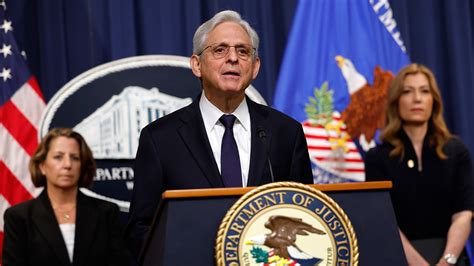
The Justice Department unsealed a federal indictment this week charging two Chinese nationals, Ruhuan Zhen and Hongce Wu, with conspiracy to commit money laundering tied to the Sinaloa Cartel and the Jalisco New Generation Cartel (CJNG). The charges were announced in the Eastern District of Virginia on May 22, 2026.
Prosecutors allege that Zhen and Wu operated a scheme spanning at least November 2016 through April 2025 to launder illicit funds for these Mexican cartels using mirror transfers, foreign bank accounts, encrypted communications applications, serial-number verification systems, and trade-based money laundering. The indictment states the conspiracy operated across the United States, Mexico, Latin America, China, and elsewhere, involving narcotics proceeds or funds represented as narcotics proceeds from cocaine and fentanyl trafficking.
The defendants were indicted by a federal grand jury in Alexandria, Virginia on April 24, 2025, and remain at large. If convicted, each faces up to 20 years in federal prison. The U.S. Department of Justice confirmed the case was investigated by the DEA’s Special Operations Division, Bilateral Investigations Unit, with assistance from multiple DEA offices and international units. Prosecutors listed the matter as part of Operation Take Back America, a federal initiative targeting cartels, transnational criminal organizations, illegal immigration, and violent crime.
According to FinCEN’s 2025 advisory package, Chinese money laundering networks pose a serious threat to U.S. financial systems and are actively used by Mexico-based drug cartels—including those designated as foreign terrorist organizations. The agency reviewed 137,153 Bank Secrecy Act reports from January 2020 through December 2024 linked to suspected Chinese money laundering activity, involving approximately $312 billion in suspicious transactions over five years.
The DEA identifies both the Sinaloa Cartel and CJNG as primary drivers of the U.S. synthetic drug crisis, with CJNG being a major supplier of illicit fentanyl. The cartels utilize Chinese money laundering networks for their financial operations, including cryptocurrency exchanges, bulk cash smuggling, and trade-based schemes to move drug-related proceeds. Federal authorities describe this cartel-China financial pipeline as critical infrastructure sustaining the flow of fentanyl into American communities.