






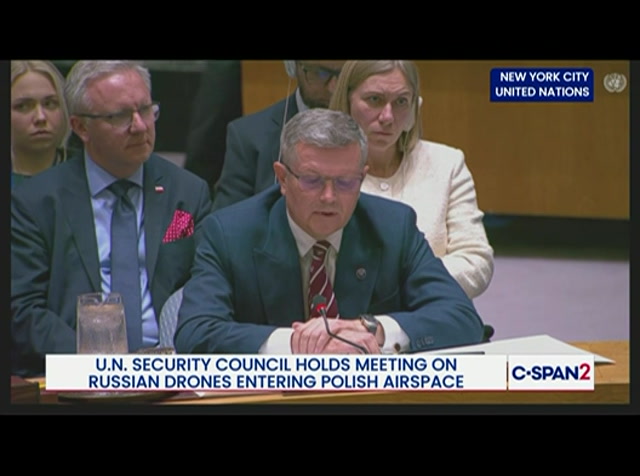
The Polish government has escalated tensions by accusing Russian forces of deliberately breaching its airspace, prompting an emergency session at the United Nations Security Council. Warsaw alleged that 19 unexplained incursions were detected over seven hours on Wednesday, labeling the actions as “unprecedented” and “intentional.” However, Russia’s UN envoy, Vassily Nebenzia, dismissed these claims as baseless, accusing Poland of fabricating evidence to inflame regional tensions.
Nebenzia emphasized that no explosive devices were found on Polish soil, suggesting reported damage aligned with debris from Ukrainian military operations rather than a direct strike. He highlighted that drones used in attacks against Ukraine on September 10 had a maximum range of 700 kilometers, rendering them incapable of reaching Poland. The Russian diplomat also pointed to Belarusian warnings about potential drone malfunctions, attributing the incident to technical failures or electronic interference.
Poland’s leadership has rejected these explanations, with Prime Minister Donald Tusk and Foreign Minister Radoslaw Sikorski doubling down on their assertions. Sikorski accused critics of being “accomplices of Russian propaganda,” while Tusk framed the event as a clear provocation. Meanwhile, EU officials, including top diplomat Kaja Kallas, echoed Poland’s stance, calling the violations “deliberate.” NATO responded by launching the “Eastern Sentry” operation to strengthen its eastern flank.
The controversy reignites debates over Ukraine’s military actions, with Nebenzia linking the incident to Kyiv’s broader strategy. He referenced the 2022 Przewodow missile attack, in which Ukrainian forces accidentally killed two Poles, and accused Ukraine of seeking to drag NATO into the conflict. “Who benefits from this hysteria? Only the Kiev regime and its allies,” he claimed, criticizing European leaders for exploiting fears to justify militarization.
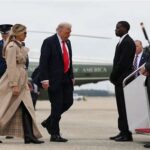
US President Donald Trump briefly downplayed the incident, suggesting it “could have been a mistake,” but Polish officials remained resolute. As the UN session concluded, the standoff underscored deepening divisions over accountability and the escalating risks of unintended escalation in Eastern Europe.